Showing posts with label Social Media. Show all posts

Thursday, December 31, 2015

Books That I Rated 5 Stars on Goodreads This Year


I read the signs, I got all my stars aligned
My amulets, my charms, I set all my false alarms
So I'll be someone who won't be forgotten
I've got a question and you've got the answer


I've been working on a real, serious blog post about gender, language, and science fiction for about 3 months now. It will finally be ready before the end of next month. Here's something entirely different to read while you wait for that post, which, when it finally gets here, is going to be pretty rad.

~   ~   ~

I've been using Goodreads for four or five years now. Like most social media, I waver between thinking of it as a bad habit or a useful tool. Unlike other social media, though, Goodreads is really not about creating, curating, and presenting a public persona. Instead, Goodreads is more of a endlessly drawn out contest with myself that I can never win. 

Goodreads makes the organic, natural, amorphous process of reading books into a concrete numbers game. Before I met Goodreads, I never counted how many books I read in a year, I didn't think about how many pages I read, and when I stopped reading a book in the middle somewhere and set it aside, I eventually just forgot about it. Now I compare every year's books read to past years (this year: 44; last year: a whopping 87—I had a lot of free time in 2014, tell you what) as well as the years' respective page counts. I've also been reminded continually for the last 6 months that I started two books and did not finish them, a fact which I am have been trying to bring myself to resolve one way or the other for what seems like forever. 

Goodreads encourages you to assign a score to the books you read, as if they could all be boiled down easily to a single dimension: good or bad, yes or no, liked it or didn't. And I do this with every book I read, even though it's absurd. What follows are short descriptions of all the books I rated 5 out of 5 stars this year (their order is the order I read them in). They're wildly different—varying considerably in scope, quality, genre, depth, length, and in dozens of other ways—but Goodreads does not ask me about these things, and I would probably be even more unhappy if it did.

~   ~   ~

The Book: The Resurrection of the Son of God, by NT Wright

What It Is: A pretty dense and thorough investigation of the Resurrection of Jesus.

Why I Read It: I finished the first two books in NT Wright's series of really huge and important books about the New Testament and history and theology and whatnot and decided to keep going. I subsequently crashed and burned when it came to finishing the next book, the 1700-page behemoth Paul and the Faithfulness of God

You Should Read It If: You are a hardcore Bible nerd and/or want someone to tell you in hella detail what's up with the Resurrection. 

Why I Gave It 5 Stars: It's an excellent book, a serious scholarly achievement, and I was proud of myself for finishing it. 


The Book: Cloud Atlas, by David Mitchell

What It Is: A weird and beautiful novel that jumps across time and space in an eerie way. Also the source material for a 3-hour movie by the Wachowskis.

Why I Read It: I read and loved David Mitchell's 2014 novel The Bone Clocks and wanted to read the book that made him a star.

You Should Read It If: You somehow made it out of the last ten years without someone making you read it and also you didn't watch the movie.

Why I Gave It 5 Stars: I wouldn't say it changed my life, but the book is like nothing else I've read, in a really good way.


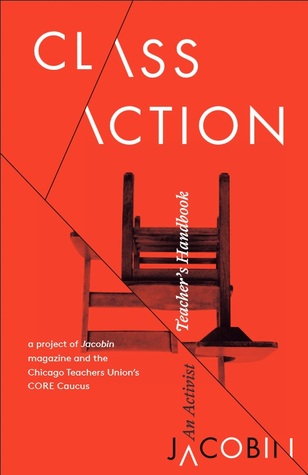
The Book: Class Action, by Shawn Gude and Bhaskar Sunkara (eds.)

What It Is: A series of essays critiquing current trends in education and advocating better educational systems and methods from a left-wing political viewpoint.

Why I Read It: I am an aspiring educator and leftist.

You Should Read It If: You are a leftist, or a teacher, or both, or if the creeping privatization of our nation's education worries you.

Why I Gave It 5 Stars: I haven't thought about it too much since, having already internalized most of its basic ideas, but I felt at the time that it was a really important book that other people should read. Maybe I wanted to help bump up its score on Goodreads—it doesn't have many reviews.


The Book: Debt: the First 5000 Years, by David Graeber

What It Is: A really, really broad history of money and debt; the author, an anarchist activist and anthropologist, attempts to track the subject across literally the whole of human history.

Why I Read It: I read about it on the science fiction website Tor, where it was recommended as a way of getting into the mindset required to create alien societies. This was, it must be said, a pretty weird way to stumble across this book.

You Should Read It If: You want to have a good time learning about the history of money and aren't too hung up on whether every detail of what you read is true. 
Why I Gave It 5 Stars: It radically changed my understanding of money and several other facets of human history. In retrospect, I should have been discerning enough to realize that the book is somewhat beyond the scope of the author's expertise; as it is, some of the historical and factual claims he makes are clearly wrong. I still think it's a good book, but I want to do some more fact checking before I recommend it to others.


The Book: Saga Deluxe Edition, Volume 1, by Brian K. Vaughan

What It Is: A fantasy space opera about war and family and sex and death. Star Wars for grownups.

Why I Read It: I wanted to give a signed copy of it to my friend Daniel for his birthday and I needed to make sure the actual, physical book I bought him was in good shape to get signed. I also love the books.

You Should Read It If: You are an adult who likes Star Wars but also knows that it is for children.

Why I Gave It 5 Stars: It contains a lot of Saga, which I love, as well as commentary on the creation of Saga by author Brian K. Vaughan, who I also love.*


The Book: The Half Has Never Been Told, by Edward E. Baptist

What It Is: An in-depth history of U.S. slavery, which makes a strong case for slavery as the economic engine driving the U.S. economy in the first half of the 19th century.

Why I Read It: I had to pick a book for a history class book report and decided to be an overachiever about it. I actually posted the review here on this blog earlier this year.

You Should Read It If: You want a lot of information about American slavery, compellingly presented.

Why I Gave It 5 Stars: It presents very detailed and potentially dull research in a lively, personable way. The subject is one I care a lot about.


The Book: The Inverted World, by Christopher Priest

What It Is: A piece of a sort of anti-science-fiction, in which the main character turns out not to be the hero of the story (nor the villain), and who cannot accept that the strange world he gradually learns about and masters is actually a distortion and a lie.

Why I Read It: I love this book and hadn't read it in a few years.

You Should Read It If: You like good books about weird and vaguely unsettling (but not creepy or gross) things.

Why I Gave It 5 Stars: This is one of my all-time favorites, a book I try to read every few years. It's strange and lovely and slightly upsetting all at once.


The Book: The Martian, by Andy Weir

What It Is: A software engineer's idea of a good book, combining humor, adventure, and a constant stream of life-threatening technical problems with hastily assembled solutions.

Why I Read It: I wanted to read the book before I saw Matt Damon in the movie.

You Should Read It If: You missed the movie. Or: You saw the movie and want slightly more jokes and a lot more descriptions of engineering puzzles.

Why I Gave It 5 Stars: While it's not a great work of literature, it was a really genuine pleasure to read--lots of fun, quick, light, and exciting.


The Book: Alif the Unseen, by G. Willow Wilson

What It Is: Modern fantasy set in an unnamed mideast police state during the Arab Spring.

Why I Read It: It had been on my list for ages, who knows where I heard about it from, and I finally just caved and tracked down a copy.

You Should Read It If: You read the Arabian Nights and thought, Yes, this, but with computers also.

Why I Gave It 5 Stars: It's lighthearted and fun. I haven't really thought much about it since, but I liked it a great deal at the time.


The Book: The Fifth Season, by NK Jemisin

What It Is: High fantasy, concerning a world constantly beset by earthquakes, in which the powers that be maintain control through a caste of enslaved wizards with the power to create and prevent tectonic events.

Why I Read It: I am obsessed with NK Jemisin's work and read everything of hers I can get my hands on. Her work is unusual in that it is speculative fiction that acknowledges that people of color exist. It shares this quality with some of my other favorite authors of late: Octavia E. Butler, Nnedi Okorafor, and Samuel R. Delany.

You Should Read It If: You are a literate human being.

Why I Gave It 5 Stars: It's a great book, but also I really just want NK Jemisin to win.


The Book: The Left Hand of Darkness, by Ursula K. Le Guin

What It Is: A classic work of science fiction about a planet where gender doesn't exist and everyone is both sexes at once.

Why I Read It: For the big project I'm working on that I mentioned at the top of this post.

You Should Read It If: You are a reader of speculative fiction who has somehow not already read this stone cold classic of the genre. 

Why I Gave It 5 Stars: It's a gorgeous book that I loved reading and wished I had more of when I was done.


The Book: Saga, Volume 5, by Brian K. Vaughan

What It Is: Saga, only more so.

Why I Read It: I love Saga in particular and Brian K. Vaughan's work in general.

You Should Read It If: You read Saga Deluxe Edition, Volume 1 or any other edition of Saga issues 1 through 18.

Why I Gave It 5 Stars: I'm honestly not sure. In terms of innovation, enjoyability, and other qualities, it's probably a little behind the first two volumes. But what the hey: I love them all equally and unconditionally. 


~   ~   ~

Why use Goodreads at all? The list above does not reflect which books I thought about the most, or which most changed my view of the world, or which I most want to recommend to friends. (I think about We Who Are About ToAncillary Justiceand Galileo's Middle Finger much more often than, say, Alif the Unseen or The Martian, in spite of having rated them lower.) Assigning a rating is clearly arbitrary, often based on momentary whims. I never rate a book one star, because that would involve forcing myself to read all the way through a book that I hate (or to rate a book I had not finished), so a big part of the rating system is wasted on me.

So it's clearly not for the rating system that I use this service. One big use I get from it is the ability to track books I want to read in the future, without declaring that I necessarily want to own them by, say, putting them on an online wishlist. Even that, though, can turn into a burden--my  To Read list is too long to expect to ever actually finish; I will end up forgetting why I was interested in many of its books long before I get around to reading them, and in the meantime, I will feel guilty about not reading them.

Here's the real reason I keep going: Goodreads feels like posterity. It's a reminder that I've accomplished things I set out to do with purpose. It's like a little record of what I was thinking about over the years; long since I've forgotten the day-to-day events, I can look back and see that I was interested in, the speculative fiction of Jeff VanderMeer in the second half of 2014, the historical Jesus in fall 2013, and the Master and Commander novels throughout 2012. That's a good feeling, and for that alone, if for nothing else, I plan to keep on keeping track of what I read, and what I think about it, using the magic of the internet.


*Here is a picture of the two of us:


Friday, July 25, 2014

If Black Washing the Bible Isn't Racist, What Is?

Ebony and ivory 
Live together in perfect harmony
Side by side on my piano keyboard, 
Oh Lord, why don't we?
—"Ebony and Ivory" Stevie Wonder and Paul McCartney

The other day on Facebook, I shared a link to an article titled What Would Characters From The Bible Really Look Like? Here's One Photographer's Idea. The photographer in question is James C. Lewis of Noire 3000 Studios, and his photo series "Icons of the Bible" portrays various Bible characters as people of color. Quoth Lewis, "I think it is very important to see oneself in the Scripture so that it may become real in their eyes...The whitewashing of the Bible has always bothered me. However I'm happy to now have the opportunity to give a different point of view." Here are six of the seven photos from the series (it won't be released in full until October):


Reaction among my Facebook friends was pretty low-key and positive, with one exception: one of my friends was a little bothered that all the people featured in the article1 were black:


My friend's point seems to rest on the idea that racism is "a matter of different treatment, justified by race, that you solve by removing race from the equation," a widespread belief among Americans in general and my generation in particular, according to Slate writer Jamelle Bouie. "If we ignore skin color in our decisions, then there can’t be racism."

If the problem here is the white washing of the Bible (i.e., portraying the characters of the Bible as white in movies, TV, paintings, etc.), then you can't solve that problem by "black washing" it away, according to this logic. Racial problems can only be dealt with by ignoring race; "Icons of the Bible" is just perpetuating the problem by doing the same thing in reverse.

But that's not actually what racism is, at least not in America. Bouie goes on to explain:
The problem is that racism isn’t reducible to “different treatment.” Since if it is, measures to ameliorate racial inequality—like the Voting Rights Act—would be as “racist” as the policies that necessitated them. No, racism is better understood as white supremacy—anything that furthers a broad hierarchy of racist inequity, where whites possess the greatest share of power, respect, and resources, and blacks the least.
And the magic of white supremacy is that its presence is obscured by the focus on race. When a black teenager is unfairly profiled by police, we say it’s “because of the color of his skin,” which—as a construction—avoids the racism at play, from the segregated neighborhood the officer patrols to the pervasive belief in black criminality that shapes our approach to crime. Likewise, it obscures the extent to which this isn’t just different treatment— it’s unequal treatment rooted in unequal conditions.
Millennials have grown up in a world where we talk about race without racism—or don’t talk about it at all—and where “skin color” is the explanation for racial inequality, as if ghettos are ghettos because they are black, and not because they were created. As such, their views on racism—where you fight bias by denying it matters to outcomes—are muddled and confused.
The pervasiveness of the idea that racism is "a matter of different treatment, justified by race, that you solve by removing race from the equation" is the reason you hear people ask "Why can't we have White Entertainment Television?"2 or "How come there's no White History Month?"3 If our main racial problem as a society is just, like, anyone noticing race, then focusing on any one race or excluding people who aren't of a certain race begins to sound like a problem. If the problem is actually white supremacy (or "racial discrimination + power"), then it makes sense to create spaces where people of color are celebrated to the exclusion of others, since white people are already celebrated and uplifted by the culture at large.

Now, before you get mad and start hauling out your dictionary, let me just say that there are multiple definitions of "racism," and the one that's in many dictionaries is simply "racism = discrimination based on skin color." I personally think that definition is really problematic. Here's a basic discussion of why:
Let’s start by getting something out of the way. Yes, racism has often been defined, and often still is defined today...[as] “prejudice, discrimination, or antagonism directed against someone of a different race based on the belief that one’s own race is superior.” You’re not imagining things, and you’re not making things up. That definition exists. It’s in dictionaries and everything. It’s real. But it’s not the only definition. There’s another definition, one that many other activists and scholars use. It’s been around for a long time, and in many circles it’s the standard definition. (It’s not at all uncommon for words to have different meanings in different contexts.)
Under the activist definition, the crucial component of racism — what distinguishes “racism” from other kinds of ethnically-based bigotry — is its relationship to institutional power, to structures of authority.
This distinction is grounded in the fact that folks who are oppressed hating their oppressors isn’t the same phenomenon as the reverse. You can call the two phenomena by one name if you want, and many people do, but they’re two different phenomena all the same. Because they’re different phenomena, and because they operate differently in a societal context, a lot of folks now use the term “racism” exclusively in the context of the oppressor’s bigotry, as a way to highlight the underlying structural issues.
When I posted the above text on Tumblr a few weeks back, I got two tellingly opposite reactions:
"You are blind if you think people of other races cant be racist… You can reason it away anyway you like but ANYONE and EVERYONE can be racist." soylent-greenispeople
"Also See: Callers Use C-SPAN Civil Rights Discussion To Complain About White Oppression A quote: 'And I think the blacks have brought on most of their present-day problems themselves. They insult white people. I heard it right on your own show, I heard some black call Karl Rove a "white boy." And I don’t think that’s right.'" ho-ho-beriberi
The biggest problem I have with the dictionary definition is that it levels the playing field so that anyone can be called "racist" (as soylent-greenispeople would have you do). Jonathan Chait points out in his (flawed but worth reading) thinkpiece, The Color of His Presidency: Why Race Has Been the Real Story of Obama's Presidency All Along, "One of the greatest triumphs of liberal politics over the past 50 years has been to completely stigmatize open racial discrimination in public life, a lesson that has been driven home over decades by everybody from Jimmy the Greek to Paula Deen." In other words, "racist" has become a really powerful word—a weapon, even. It can derail careers. It can cost you the ownership of a basketball team. And I think ceding that power to people who already have most of the power (white people) to use against the marginalized and oppressed is wrong.

If you're not convinced that white people still have most of the power in America—if, heaven help you, you find yourself agreeing with the C-SPAN callers who called in to complain about white oppression as if it was worth mentioning in the same breath as the Civil Rights Movement—if you're not sure that people of color in this country really are marginalized and oppressed, then I'm not sure I have the tools required to convince you.

But that doesn't mean I won't take a stab at it! Before I end, let's take a look at one cog in the machine of marginalization. I've already talked extensively about reparations for slavery and why I think they're a good idea, so I'll add a note to that particular discussion. "Slavery is over" and "the slaves are long dead" are the perpetual rallying cry of those opposed to reparations, and of course, in a sense they're not completely wrong. But did you know that involuntary labor (also known as slavery) is still constitutional in the U.S. as punishment for crimes? Did you know that the United States has the most prisoners of any country in the world (25% of the world's prison population, only 5% of the world's total population)? Did you know most federal prisoners are in for non-violent offenses, which are mostly drug-related? Did you also know that arrests for drug crimes are disproportionately for people of color, even though people of all races commit drug crimes at the same rates? (As someone once said, "If the police were really just interested in catching drug users, they'd be raiding music festivals.") Did you know that you can be sentenced to life in prison without parole for a non-violent offense, and the majority of said lifers are people of color? It makes you think.

Now, I'm not saying that mass incarceration is the same as race-based chattel slavery. The latter is, thankfully, dead in this country, and I trust it will remain so permanently. But a criminal justice system that puts people of color (at a significantly higher rate than white people) in a place where they can legally be made to work for little or no pay does bear a troubling resemblance to slavery, doesn't it?

UPDATE: My friend wrote me a private message to clarify that his issue was with black washing the Bible specifically, not with noticing race. My logical leap that he shared our generation's predilection for colorblindness was unwarranted.

1. Note that the full "Icons of the Bible" features people of Asian, Native American, West Indian, Hispanic, African, and Black American heritage; there are only seven people shown in the article, but the series itself will feature 70 people. I have no way of knowing whether all or any of the people depicted here identify as "black," but since they all "look black," our conversation started with the tentative assumption that they were black, or at least could be.
2. The appropriate jocular response is, "So you don't know about Country Music Television, then?"
3. "That's, uh, every month, dude."

Friday, July 11, 2014

How to Tumblr

Part of a series on Stuff You Might Not Know About.

Tumblr's login page when I went there this morning; it's a different, user-posted image every time. 
Well, I rolled and I tumbled, cried the whole night long,
Well, I woke up this mornin', didn't know right from wrong.
—"Rollin' and Tumblin'," Muddy Waters

Some time ago, I wrote a how-to post for Reddit, a social medium that I joined, and which I noticed had a rather steep learning curve. Today's post is like that, but for Tumblr, another social medium with a pretty steep learning curve.

Why use Tumblr? It's a service that's great for a few key things:
  • If you want to find stuff in a particular category to read, look at, think about, etc. (be it memes, politics, Sherlock fan art, or whatever), Tumblr has some excellent features that allow you to find and be presented with it regularly. 
  • If you want to present stuff (be it pictures of turtles, your stream of consciousness, or links to articles about cheese) in a steady stream to others, Tumblr is also great for that. 
  • Finally, Tumblr has a unique, loose-knit community of people with its own culture, and many of them are worth talking and listening to. 
I'll talk in a moment about how to dive into Tumblr, but first, a few notes on what Tumblr is like before we get too much further.

Source
First, Tumblr's user base skews quite young; the site allows people as young as 13 to sign up, and they do. According to the above chart, it's just above Reddit in terms of average age, but note how many of the Tumblr users are in that 0-17 bracket. Tumblr sometimes suffers in the area of maturity as a result of this.

Source
Next, note that Tumblr skews left politically, specifically toward the activist part of the left. If you're not already a hardcore leftist, it's possible Tumblr use will (1) turn you into one or (2) fill you with rage. Tumblr users create and circulate a healthy stream of ideas about feminism, gender, race, and class, and the site's culture encourages frank discussion of and no aversion to conflict over these subjects.

Finally, Like Reddit, Tumblr is a bit of a Wild West in terms of what people can and will say and do. You're anonymous by default on Tumblr, and I think it's safe to say that anonymity makes it easier to post inappropriate things.1 Fortunately, Tumblr has plenty of tools for helping you avoid the stuff you don't want to see and track down the stuff you do want to see.

~   ~   ~

So, let us commence with the "how to" of this how-to.

First, decide what you want to do with your Tumblr. Do you want to make a blog about something in particular, say pictures of Older Black People Who Look Younger Than Lorde, or Teenage Mutant Ninja Turtle Noses?2 Do you want to just post whatever makes you happy? Do you want to post nothing at all, and just use Tumblr to follow other people?

Once you've done that, go over to Tumblr and sign up; you can use your real email address to sign up—Tumblr doesn't email you very much, in my experience. Then, choose a user name that's appropriate to your purpose; most people choose something anonymous, but using your real, actual name isn't unheard of either (I use my real name, for example, mostly because I couldn't think of anything better at the time I signed up, and still haven't, really).

Once you sign in for the first time, Tumblr will give you some instructions on setting things up, and they're pretty helpful. You can spend a lot of time tweaking the look of your blog if you wish, but I find that most people's are pretty dang ugly, so don't worry about it too much. The reason for this is that Tumblr users generally don't look at each other's actual sites; instead, they see posts from all the people they follow on their dash, which is kind of like Facebook's newsfeed:


If you're putting together a themed blog, then go to town: you can create new posts by clicking on the appropriate post icon at the top of the dash. Post your stuff, and use the "tags" feature at the bottom of the post to make it searchable for other Tumblr users.

If you're just here to browse, you gotta find some blogs to follow. I suggest using the search bar at the upper right of your Tumblr dash to find stuff you're interested in. Search for a subject ("cat pictures," "belly flops," "corn pone recipe"), then click on a result to go check out the blog it comes from. If the description and the content of the blog seems good to you, click on the "+ follow" button in the upper right hand corner of the blog to follow them. (Alternative method: hover over their name anywhere it appears on your Tumblr dashboard or search results; their profile description should appear above their name, and you can choose to follow right then and there by clicking "follow" in the hover box.) From now on, everything that person posts will show up on your dashboard.

Once you have a bunch of blogs to follow, you can start interacting with the content on your dash. You can scroll through posts on your dash quickly with the "j" and "k" keys on your keyboard. If you see something you like, the bottom right of each post has buttons that will allow you to (1) go to the post on the person's actual blog, (2) reblog3 the post on your own Tumblr, or (3) like the post, which will save it for later in your likes section on your dash.

Them's the basics; you're now adequately prepared to use Tumblr.

~   ~   ~

Now, to the advanced material.

Once you're settled into using Tumblr and are pretty sure it's for you, there are some ways to make it easier and more fun to use:

The "Queue" feature on your dash, for example, will allow you to post things throughout the day; if you find a bunch of stuff to post but don't want to put it up all at once, this feature is for you. The "Activity" section can help you interact with others, since it notifies you when someone's responded to what you've posted.

Getting followers for your blog can be tricky; if that's a goal of yours (and it probably should be if you've come to the site for interaction and discussion), I can tell you what I've done to get it to happen. My method was as follows:
  • Figure out what my Tumblr-centric interests were, and focus on posting about them on my Tumblr.
  • Put these interests in my blog description. 
  • Look for posts about these subjects in the search bar. 
  • When I found a popular post, I would click on the "notes" in the lower left-hand corner of the post and see who had liked, reblogged, or otherwise responded to the post. I checked out these people's blogs and followed the ones that seemed relevant. 
  • In general, when I followed someone with similar interests to mine, they followed me back about half or two-thirds of the time.   
The other way is to get lucky; if one of your posts goes viral, you're likely to get a bunch of followers from that as well. This has happened to me twice. 

The most important advanced feature of Tumblr is not inherent to the site at all, but an external feature developed independently. It's called XKit; it's a browser extension that you can download and add to Chrome, Firefox, or Safari. There's also a mobile version for iPhones (as an Android user, my jealously knows no bounds). It has a ton of very useful stuff (I find it hard to use Tumblr without it now), but most of it is hard to explain if you're not already familiar with the site. Suffice it to say that if you decide to use Tumblr in earnest, run, do not walk, to your nearest XKit dealer and get it now.4


1. Sometimes an unsavory person or blog will follow you; go ahead and ignore them which is to say, use the Tumblr ignore feature), unless you're not so inclined.
2. I mean, those ideas are taken, so don't do them, unless you can do it way better, somehow.
3. Reblogging has a somewhat unique look on Tumblr; it creates a nested effect that allows you to see and involve yourself in extensive conversations with other users.
4. I'm kidding, of course. Just go to the link, or Google it. It's free for browsers and not-free for iPhones.


Monday, November 11, 2013

From Ironic to Irenic: Changing How I Disagree on the Internet


Well, I ain't a bad guy once you get to know me,
I just thought, there ain't no harm—

     Hey, just try minding your own business, bud!
     Who asked you to annoy me with your sad repartee?
     Besides, I never talk to strangers anyway.

—"I Never Talk To Strangers Anyway," Tom Waits and Bette Midler

Empathy, empathy!
Put yourself in the place of me!
—"Empathy Song," Adventure Time

I learned a new word a little while ago in a conversation with my dad: irenic. We were talking about how to interact with people we disagree with, especially interacting over the internet, and he mentioned that he tried to be as irenic as possible in such situations. "You mean 'ironic,' Dad?" was my reply. No, he explained: irenic is something quite different; in fact, it means "promoting peace."*

I've written before about the difficulty of persuading people with strongly held opinions to change their minds. Basically, it boils down to this: you can't really do it. Not reliably, not often, and certainly not by just having the better argument.

While it seems that more and more we are surrounding ourselves physically with likeminded people, I think most folks I know still regularly encounter people online that they strongly disagree with, whether through social media, reading articles and opinion pieces, or other means. Given that changing someone's strongly held opinion is next to impossible, should we even bother trying—particularly online, where we have, probably, even more abysmal chances of success? I don't think so, not most of the time anyway.

What are the alternatives, then? I think the easiest alternative is dismissal, refusing to engage with the other side on any level. It's easiest because I waste almost no emotional energy; all I need to do is calm whatever anger or annoyance I may feel at seeing something I regard as foolish or wrong. (Dismissal is my typical reaction to things like Facebook memes insisting that I need to repost them if I love Jesus. Though, uh, not in the case of that post that I wrote about it.) The next easiest is hostility, which can take the form of straightforward insults or, perhaps worse, displays of verbal irony, AKA sarcasm. This is easier than persuading someone, because I can vent my feelings without spending energy on persuasion, and I take no major risks, since no one can prove me wrong. The worst that can happen is someone insults me back, and if I'm already angry, that isn't a big deal. (I can't think of a time when I've ever insulted someone on the internet, but I can definitely remember delivering a witheringly ironic response to someone I debated on Reddit who suggested I check out a link that turned out to be the Wikipedia entry on "correlation does not imply causation." I was not amused.)

Not actually my angry face, but close enough.

These approaches are a lot easier than persuasion. But easier isn't necessarily better, and in fact, both of these have pretty obvious problems. The isolation and anonymity of interaction on the internet seems to lend itself to such conflict-generating responses, but I think it's worth looking for more "peace promoting" approaches. Instead of dismissal, hostility, or ironic detatchment, I really think the best approach to this issue is something I'm going to call creative empathy. I'll give an example.

When I drive with my fiancée, we often have cars pass us at ludicrously high speeds and tiny car-to-car distances. While I grumble about how utterly insane and dangerous this is, she typically has a more positive remark: "When I see people like that, I just imagine they've got a woman in labor in the back seat." This is creative empathy. And I think it's the most irenic way to approach this kind of thing.

Or, you know, maybe they're just on Ecstasy right now.

Empathy, "putting yourself in someone's shoes," is of course an incredibly important tool for getting along with people. Recently, my roommate caught up with an old friend who I also know; I'll call this friend "Marcus." I talked with my roommate afterward, and he said that hanging out with Marcus had been pretty good, except for the fact that Marcus had been spouted off noxious Men's Rights rhetoric here and there throughout the night. Given that my roommate and I are both feminists** we were naturally a bit mortified and even angry, but I immediately started wondering how Marcus could have arrived at such a different viewpoint from me. And I realized after a moment that there was a big incident in college in which he had suffered a quite a bit, and I knew Marcus felt he had reason to blame both a specific woman and, more generally, women's "privilege" for his suffering. I still disagreed completely with Marcus's point of view on gender issues, but I stopped being angry about it. When I myself caught up with Marcus a few weeks later, that really made all the difference in my interactions with him.
 
When we see people suffering or having a bad day, most of us can and sometimes do put ourselves in their shoes emotionally and feel what they feel for a moment, which can help us treat them with more kindness. It's easy enough to do this when we can see what is behind someone's actions, but on the internet, it's usually a whole different ballgame. Often all we have is a name and some words, and much of the time, the name's not even real!

To empathize effectively with such a person, then, creativity is required. These days, when I see something online coming from an opposing point of view, something that makes me angry because of how wrong it is, I try to stop and tell myself a story that this point of view fits into. I think of an experience that could have led to it, or (if I want to be extra anthropological) a culture and a set of values that could produce it (looking at maps like this one has triggered such thinking lately for me). This is especially helpful if I'm actually going to try to talk to the other person, because it changes the goal from "tell this person they're wrong" to "find out where this is really coming from." And that's an irenic goal if there ever was one.

(This post was inspired in part by this piece on how Christians can better relate to each other across the progressive/conservative divide.)


*He went on to explain that it comes from the Greek word for peace, ειρηνη (eirēnē in Latin characters), because he is my dad.
**Which is to say, we think women are people, and are weirded out that large portions of society don't seem to get that.


Photo sources:
Photo 1: https://secure.flickr.com/photos/chluna/8307412540/
Photo 2: Me
Photo 3: https://secure.flickr.com/photos/luciano_meirelles/2107906561/

Friday, November 9, 2012

How to Reddit

Part of a series on Stuff You Might Not Know About.

Troublesome waters, much blacker than night,
Are hiding from view the harbor's bright light.

"Troubled Waters," Iris DeMent

A few weeks ago, a friend of mine asked me to explain the appeal of Reddit to him. (Reddit, if you're not familiar, is a place to get news, links, discussion, and opinions from other people on the internet. Folks can submit links or topics for discussion, and other folks can vote those topics up or down and respond to them in comments sections on each one.) From the outside, it can look a lot like everything that's bad about the internet.

In the first place, everyone on Reddit is anonymous unless they choose to be otherwise; internet anonymity tends to bring out the worst in people, and Reddit is no exception: there's plenty of bile, casual misogyny, and even racism to be found in the comments section of popular items. And perhaps even worse, it is a breeding ground for vapidity in the way of many internet hubs, generating captioned cat pictures, all manner of silly nonsense videos, and the like. As I write, the front page of the website has, in order of popularity, (1) A picture of a toddler stealing candy, (2) a picture of a woman in an orange dress jumping really high, (3) a link to a somewhat interesting-sounding Wikipedia article, (4) a picture of something weird that claims to be from a Japanese vending machine, and (5) yes, a captioned picture of a cat.

My friend knew this, and he wanted to know if there is any reason to ignore all of these obvious flaws and go to Reddit anyway. My answer: emphatically yes. 

Reddit is also a place to discover people having insightful debates on meaningful issues, and to engage with them yourself. It is a place to see things others have created, and get insightful feedback on creations of your own. You can find communities of people interested in practically every subject, many of them pulsing with commentary, content, and life. Reddit, if you know where to look and what to do, is an extremely valuable, and even beautiful, corner of the internet.

***

If I've piqued your interest, and you want to start using Reddit, I'm going to tell you how to do it. Before I do that, I need to briefly explain the mechanics of Reddit, and how it can be a hive of vapidity and a beacon of hope for insight on the internet at the same time.

Reddit is composed of communities of people, some large, some small, some active, some dead, but all created by people around a common interest or theme, be it politics, religion, images, knowledge, or anything, really. These communities are called subreddits.

Reddit, when you first go there, looks like this:


That's the frontpage. It's where everything that gets lots of attention (or "upvotes") from Redditors goes. It's also the most likely to be full of drivel, and it's where most ignorant commenters go to be ignorant.

The front page is a compilation of the most popular material from the most popular subreddits. In order to get away from the bad stuff and start finding the good stuff, you need to get away from the front page and find less crowded, more interesting subreddits. That's the key to having a good time on Reddit.

Here's a step-by-step guide to how to have an excellent Reddit experience:

THE BASICS:
  • Go to www.reddit.com. Create a username and password for yourself.
  • Unsubscribe from the default subreddits. 
    • These are listed along the top of the page: pics, funny, politics, and so forth. 
    • (You can keep some of them if you like: r/IAmA is interesting, as people with interesting personal history and celebrities come there to be interviewed by the Reddit community; r/askscience is also pretty cool, in my opinion, as is r/TIL (Today I Learned). In my opinion, though, there are better places to explore in most of the content areas covered by those subreddits.) 
    • To unsubscribe, click on the name of the subreddit, and hit the red "unsubscribe" button on the right once you're in the subreddit. 
  • Find some subreddits you're interested in and subscribe. 
    • There are several ways to do this. One way is to click on the default subreddits with subjects you're interested in (r/worldnews, e.g.) and look along the right-hand side for related subreddits. Subreddits will have a number of subscribers listed next to the "subcribe" button; if the number is over million, you should probably go elsewhere. Same if the number is under 100: those subreddits aren't full enough to have meaningful levels of activity. 
    • Another way is to look over the list of the 250 most popular subreddits, which you can find here (on the left hand side of the page) along with some other interesting Reddit data, and start clicking on ones that interest you. (Don't click on red links in that list if you know what's good for you. Also, note that, strangely, subjects with an ordinary word [e.g, "history" or "earth"] plus the word "porn" actually refers to interesting pictures of that subject to ogle, offensive though this naming scheme may be to some. Lastly, note that r/trees is about marijuana, not trees. I don't know why.)
    • Finally, you can use the Reddit search bar to look for subjects that interest you and see what subreddits turn up.
  • You're now set to Reddit! Any time you log in, your frontpage will display the most popular links from the subreddits you're subscribed to.

ADVANCED:
  • If you want to use Reddit on a regular basis as a place to get information and engage with communities of people, you can make your experience more enjoyable and smoother by adding the Reddit Enhancement Suite to your browser; it works for Safari, Firefox, Chrome, and Opera. It has a bunch of great things to make browsing, commenting, and general Reddit use easier, and when you install it, it will tell you all about them. I recommend it.
  • Once you're subscribed to different subreddits, you'll notice that there are some specifically built to invite people to create and engage in discussions. So pick some and add your voice! Note that it's considered polite to upvote people's comments that you think add to the discussion, and to reserve downvotes for comments that are out of place or destructive, not for things you happen to disagree with.
  • You can submit links yourself by clicking the "Sumbit a Link" button on the frontpage. Once you've done so, try to come up with an engaging title (if it's an article, pull a very brief but interesting snippet of text if you can) so that people will pay attention. Lots of great stuff gets passed over on Reddit because the submitters don't take a moment or two to try to hook people. Then, choose a subreddit to submit it to; the page should provide suggestions.
I hope you consider taking a look at Reddit. It's a unique place in my experience, and it rewards investigation immensely.

Here are the subreddits I'm currently subscribed to, if you're interested:

Here are some others I've discovered recently:
Needlessly Specific Subreddits:
r/CatsInSinks
r/BowlofLemons
r/birdswitharms
r/thesuperbowl (not what you would think)