Showing posts with label The Internet. Show all posts

Thursday, December 31, 2015

Books That I Rated 5 Stars on Goodreads This Year


I read the signs, I got all my stars aligned
My amulets, my charms, I set all my false alarms
So I'll be someone who won't be forgotten
I've got a question and you've got the answer


I've been working on a real, serious blog post about gender, language, and science fiction for about 3 months now. It will finally be ready before the end of next month. Here's something entirely different to read while you wait for that post, which, when it finally gets here, is going to be pretty rad.

~   ~   ~

I've been using Goodreads for four or five years now. Like most social media, I waver between thinking of it as a bad habit or a useful tool. Unlike other social media, though, Goodreads is really not about creating, curating, and presenting a public persona. Instead, Goodreads is more of a endlessly drawn out contest with myself that I can never win. 

Goodreads makes the organic, natural, amorphous process of reading books into a concrete numbers game. Before I met Goodreads, I never counted how many books I read in a year, I didn't think about how many pages I read, and when I stopped reading a book in the middle somewhere and set it aside, I eventually just forgot about it. Now I compare every year's books read to past years (this year: 44; last year: a whopping 87—I had a lot of free time in 2014, tell you what) as well as the years' respective page counts. I've also been reminded continually for the last 6 months that I started two books and did not finish them, a fact which I am have been trying to bring myself to resolve one way or the other for what seems like forever. 

Goodreads encourages you to assign a score to the books you read, as if they could all be boiled down easily to a single dimension: good or bad, yes or no, liked it or didn't. And I do this with every book I read, even though it's absurd. What follows are short descriptions of all the books I rated 5 out of 5 stars this year (their order is the order I read them in). They're wildly different—varying considerably in scope, quality, genre, depth, length, and in dozens of other ways—but Goodreads does not ask me about these things, and I would probably be even more unhappy if it did.

~   ~   ~

The Book: The Resurrection of the Son of God, by NT Wright

What It Is: A pretty dense and thorough investigation of the Resurrection of Jesus.

Why I Read It: I finished the first two books in NT Wright's series of really huge and important books about the New Testament and history and theology and whatnot and decided to keep going. I subsequently crashed and burned when it came to finishing the next book, the 1700-page behemoth Paul and the Faithfulness of God. 

You Should Read It If: You are a hardcore Bible nerd and/or want someone to tell you in hella detail what's up with the Resurrection. 

Why I Gave It 5 Stars: It's an excellent book, a serious scholarly achievement, and I was proud of myself for finishing it. 


The Book: Cloud Atlas, by David Mitchell

What It Is: A weird and beautiful novel that jumps across time and space in an eerie way. Also the source material for a 3-hour movie by the Wachowskis.

Why I Read It: I read and loved David Mitchell's 2014 novel The Bone Clocks and wanted to read the book that made him a star.

You Should Read It If: You somehow made it out of the last ten years without someone making you read it and also you didn't watch the movie.

Why I Gave It 5 Stars: I wouldn't say it changed my life, but the book is like nothing else I've read, in a really good way.


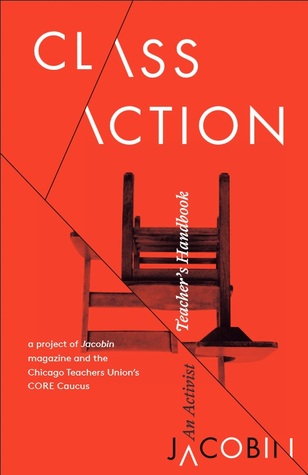
The Book: Class Action, by Shawn Gude and Bhaskar Sunkara (eds.)

What It Is: A series of essays critiquing current trends in education and advocating better educational systems and methods from a left-wing political viewpoint.

Why I Read It: I am an aspiring educator and leftist.

You Should Read It If: You are a leftist, or a teacher, or both, or if the creeping privatization of our nation's education worries you.

Why I Gave It 5 Stars: I haven't thought about it too much since, having already internalized most of its basic ideas, but I felt at the time that it was a really important book that other people should read. Maybe I wanted to help bump up its score on Goodreads—it doesn't have many reviews.


The Book: Debt: the First 5000 Years, by David Graeber

What It Is: A really, really broad history of money and debt; the author, an anarchist activist and anthropologist, attempts to track the subject across literally the whole of human history.

Why I Read It: I read about it on the science fiction website Tor, where it was recommended as a way of getting into the mindset required to create alien societies. This was, it must be said, a pretty weird way to stumble across this book.

You Should Read It If: You want to have a good time learning about the history of money and aren't too hung up on whether every detail of what you read is true. 
Why I Gave It 5 Stars: It radically changed my understanding of money and several other facets of human history. In retrospect, I should have been discerning enough to realize that the book is somewhat beyond the scope of the author's expertise; as it is, some of the historical and factual claims he makes are clearly wrong. I still think it's a good book, but I want to do some more fact checking before I recommend it to others.


The Book: Saga Deluxe Edition, Volume 1, by Brian K. Vaughan

What It Is: A fantasy space opera about war and family and sex and death. Star Wars for grownups.

Why I Read It: I wanted to give a signed copy of it to my friend Daniel for his birthday and I needed to make sure the actual, physical book I bought him was in good shape to get signed. I also love the books.

You Should Read It If: You are an adult who likes Star Wars but also knows that it is for children.

Why I Gave It 5 Stars: It contains a lot of Saga, which I love, as well as commentary on the creation of Saga by author Brian K. Vaughan, who I also love.*


The Book: The Half Has Never Been Told, by Edward E. Baptist

What It Is: An in-depth history of U.S. slavery, which makes a strong case for slavery as the economic engine driving the U.S. economy in the first half of the 19th century.

Why I Read It: I had to pick a book for a history class book report and decided to be an overachiever about it. I actually posted the review here on this blog earlier this year.

You Should Read It If: You want a lot of information about American slavery, compellingly presented.

Why I Gave It 5 Stars: It presents very detailed and potentially dull research in a lively, personable way. The subject is one I care a lot about.


The Book: The Inverted World, by Christopher Priest

What It Is: A piece of a sort of anti-science-fiction, in which the main character turns out not to be the hero of the story (nor the villain), and who cannot accept that the strange world he gradually learns about and masters is actually a distortion and a lie.

Why I Read It: I love this book and hadn't read it in a few years.

You Should Read It If: You like good books about weird and vaguely unsettling (but not creepy or gross) things.

Why I Gave It 5 Stars: This is one of my all-time favorites, a book I try to read every few years. It's strange and lovely and slightly upsetting all at once.


The Book: The Martian, by Andy Weir

What It Is: A software engineer's idea of a good book, combining humor, adventure, and a constant stream of life-threatening technical problems with hastily assembled solutions.

Why I Read It: I wanted to read the book before I saw Matt Damon in the movie.

You Should Read It If: You missed the movie. Or: You saw the movie and want slightly more jokes and a lot more descriptions of engineering puzzles.

Why I Gave It 5 Stars: While it's not a great work of literature, it was a really genuine pleasure to read--lots of fun, quick, light, and exciting.


The Book: Alif the Unseen, by G. Willow Wilson

What It Is: Modern fantasy set in an unnamed mideast police state during the Arab Spring.

Why I Read It: It had been on my list for ages, who knows where I heard about it from, and I finally just caved and tracked down a copy.

You Should Read It If: You read the Arabian Nights and thought, Yes, this, but with computers also.

Why I Gave It 5 Stars: It's lighthearted and fun. I haven't really thought much about it since, but I liked it a great deal at the time.


The Book: The Fifth Season, by NK Jemisin

What It Is: High fantasy, concerning a world constantly beset by earthquakes, in which the powers that be maintain control through a caste of enslaved wizards with the power to create and prevent tectonic events.

Why I Read It: I am obsessed with NK Jemisin's work and read everything of hers I can get my hands on. Her work is unusual in that it is speculative fiction that acknowledges that people of color exist. It shares this quality with some of my other favorite authors of late: Octavia E. Butler, Nnedi Okorafor, and Samuel R. Delany.

You Should Read It If: You are a literate human being.

Why I Gave It 5 Stars: It's a great book, but also I really just want NK Jemisin to win.


The Book: The Left Hand of Darkness, by Ursula K. Le Guin

What It Is: A classic work of science fiction about a planet where gender doesn't exist and everyone is both sexes at once.

Why I Read It: For the big project I'm working on that I mentioned at the top of this post.

You Should Read It If: You are a reader of speculative fiction who has somehow not already read this stone cold classic of the genre. 

Why I Gave It 5 Stars: It's a gorgeous book that I loved reading and wished I had more of when I was done.


The Book: Saga, Volume 5, by Brian K. Vaughan

What It Is: Saga, only more so.

Why I Read It: I love Saga in particular and Brian K. Vaughan's work in general.

You Should Read It If: You read Saga Deluxe Edition, Volume 1 or any other edition of Saga issues 1 through 18.

Why I Gave It 5 Stars: I'm honestly not sure. In terms of innovation, enjoyability, and other qualities, it's probably a little behind the first two volumes. But what the hey: I love them all equally and unconditionally. 


~   ~   ~

Why use Goodreads at all? The list above does not reflect which books I thought about the most, or which most changed my view of the world, or which I most want to recommend to friends. (I think about We Who Are About To, Ancillary Justice, and Galileo's Middle Finger much more often than, say, Alif the Unseen or The Martian, in spite of having rated them lower.) Assigning a rating is clearly arbitrary, often based on momentary whims. I never rate a book one star, because that would involve forcing myself to read all the way through a book that I hate (or to rate a book I had not finished), so a big part of the rating system is wasted on me.

So it's clearly not for the rating system that I use this service. One big use I get from it is the ability to track books I want to read in the future, without declaring that I necessarily want to own them by, say, putting them on an online wishlist. Even that, though, can turn into a burden--my  To Read list is too long to expect to ever actually finish; I will end up forgetting why I was interested in many of its books long before I get around to reading them, and in the meantime, I will feel guilty about not reading them.

Here's the real reason I keep going: Goodreads feels like posterity. It's a reminder that I've accomplished things I set out to do with purpose. It's like a little record of what I was thinking about over the years; long since I've forgotten the day-to-day events, I can look back and see that I was interested in, the speculative fiction of Jeff VanderMeer in the second half of 2014, the historical Jesus in fall 2013, and the Master and Commander novels throughout 2012. That's a good feeling, and for that alone, if for nothing else, I plan to keep on keeping track of what I read, and what I think about it, using the magic of the internet.


*Here is a picture of the two of us:


Monday, December 9, 2013

In Defense of Boring Movies: The Dark Crystal "Director's Cut"

Part of a series of essays In Defense of Boring Movies.


Ch-ch-ch-ch-changes
(Turn and face the strange)
Ch-ch-changes
Don't want to be a richer man
Ch-ch-ch-ch-changes
(Turn and face the strange)
Ch-ch-changes
Just gonna have to be a different man
Time may change me
But I can't trace time

—"Changes," David Bowie

(Note: I've embedded the film being discussed here at the bottom of the post, so skip down if you want to get straight to the action!)

Something exciting happened to fans of Jim Henson's 1982 cult classic The Dark Crystal over the weekend: they got to see what it could have been.

The Dark Crystal is a weird film, but it was especially weird for moviegoers of 1982, who were mostly familiar with Henson's work on lighter, all-ages entertainment like The Muppet Show and Sesame Street, and were not necessarily prepared for an unsettling journey through an alien fantasy land full of monsters, danger, and death. Which is what they got when they sat down to see The Dark Crystal.

Test audiences for the film found it confusing and alienating. For these reasons, they did not like it very much. As a result, the final version of the film was changed significantly; to decrease audience confusion, voiceover narration and internal monologues were added—explaning background information and character motivations, respectively—and to decrease audience alienation, scenes where characters spoke in invented languages were dubbed over with English. The result is something even a child can understand, though whether they can enjoy it depends on their level of tolerance for the weird:

Original costume from The Dark Crystal

Much like another 1982 film, Ridley Scott's Blade Runner, such changes significantly altered the film's overall feel and enjoyability, and a passionate fan base developed around both films because of their dark, weird, creative vision. Unlike Blade Runner, no version of The Dark Crystal as it was originally conceived has been made widely available to fans. Until now. 

You can read about it in more detail in the notes below, but this version consists mostly of restored audio from a VHS workprint of the film, synced with video from the DVD version, with scenes rearranged to match the order they appear in in the workprint, and with occasional VHS video from the workprint where no DVD version of the scenes exist. In short, it's the closest thing we currently have to a watchable "director's cut" cut of The Dark Crystal. And it's great.

This post is part of series of posts on "boring" movies, which I've defined up till now as movies that pose deep questions about life and then step back and give the viewer a headspace to examine these questions. This definition is a little too narrow to include The Dark Crystal, however; as far as I can tell, there are no deep questions on display in the film, and there's a little too much action for much of the movie to be considered "headspace." This cut of The Dark Crystal is a boring movie in a broader sense: it's boring because it requires significant energy to watch. This is actually a trait of many bad movies: if a movie is badly paced or confusingly cut, it can require extra energy that the audience should not have to spend in order to understand what is going on.

But if a movie deliberately sets out to challenge an audience, forcing viewers to make key connections and guess at backstory and character motivations, the result can be a much more entertaining and rewarding experience than that offered by a movie that spells everything out. In other words, movies that are willing to risk boring their viewers are often better for it. The Dark Crystal, like other movies in this series, is proof of this principle.

This cut of The Dark Crystal opens with a pair of unexplained deaths and the main character beginning a quest; he understands niether the goal of the quest nor how to accomplish it. Viewers are given no information that the characters do not have, and indeed less, as we have no idea who any of the characters we're meeting are, and information about them will only be delivered, piecemeal, later in the film. Engaged viewers will put in the energy needed to wonder about the missing information and look for it to appear later in the film, and they'll feel rewarded for their investment when they start to learn about what's kept mysterious earlier in the movie. The Dark Crystal's key enticement to convince the viewer to invest their energy this way is in its intensely imaginative and beautiful visual world, which is on display from the start and never really lets up. Check out, for exampe, this gorgeously imagined otherworldly swamp:


This cut of the movie is not without problems. The audio has been cleaned up from what was apparently a nearly unlistenable state, but it is still a VHS-quality sound, which can sometimes be jarring when paired with the crisp DVD-quality visuals, and which occasionally produces unintelligible dialog. The editor also had a few issues syncing audio and video, which results in a couple moments where the two do not quite match up. Also, some of the video is from the VHS workprint, and is of a much lower quality than the rest of the film. In this clip, you can hear some of the warbly VHS audio that the film occasionally features, and you can see some of the VHS-quality video that was salvaged from the workprint (in this case, in black and white, though some other VHS scenes are in color), providing a more complete transition between two scenes than is present in the final cut:


Lastly, one way in which this cut resembles neither the original vision of the film nor the final one is that it has long segments of untranslated dialog. The original idea was that one group of characters, the Skeksis, would speak in an invented language that would then be subtitled; this invented language appears in the director's cut, but there are no subtitles for it and the audience must guess from context what is being said. In this way, this cut feels more like another film in the In Defense of Boring Movies series, Dead Man, in which there are extended segments of untranslated Native American language dialog. (This comparison is moot if you happen to speak Cree or Blackfoot. Or Skeksis, for that matter.) While we were watching the part of the film in the clip below, I told my roommate that there was intentionally no translation or English dialog, and he said "Good, because I felt like I was going insane."


It would be nice to see an edition that both reflects the original vision of Jim Henson and that doesn't feel like a bootleg. But what we have here is still in many ways superior to the offical cut of the movie; it is a version that challenges viewers in a number of ways and more fully rewards the decision to sit down and watch The Dark Crystal. I think it's definitely worth a look, and not just for people who are already fans.


Link to an interview with the editor of this cut

Other notes from the editor:

Early versions of The Dark Crystal were a bit different than the version we see today. Jim Henson and Frank Oz originally sought to create a much darker story that relied more on the audience and less on voice-overs and inner monologues explaining the plot. In this version there's no narrator, Jen's inner monologues are gone, and the Skeksis hardly ever say anything in English (Aughra speaks some Skeksis too!). This version is much more modern and a little darker with this original audio and the slightly different score. Some of the scenes are moved around too, which adds to the surreal feel of the original film. Some test audiences were more casual moviegoers and responded negatively to this version so the Henson team redubbed the ENTIRE film to help explain the plot to the audience up front and make things more obvious.

Sadly this beautiful version was mostly lost with a few rough-looking (yet still redubbed at times) scenes making it to the DVD and Blu-Ray versions. Demonoid user Aikousha saw this early test version when he was a kid and took it upon himself to track down this little bit of film history. What he found was a very nasty black and white "workprint" copy (used by the Dark Crystal production team) on a VHS tape that was very grainy and was almost unlistenable due to tape compression and SEVERE hiss and noise. But the important thing was that it was a mostly intact version of the beautiful vision of Jim Henson, Brian Froud, and Frank Oz. The Dark Crystal, as originally intended!

Workprints are used by the production crew and this one has all the trappings of one. Grease marks on the film, rough cuts, tape slowdown, and unfinished special effects among other things. Now, this workprint is still out floating around on the internet but it's really painful to watch and the sound is atrocious so I took it upon myself to clean up the audio, sync it to a clean treatment of the video, include some scenes that were unavailable anywhere else, and recut a watchable version that played out like the workprint.

Disclaimer: It's still a little rough. My computer had lots of slowdown since I was syncing to a HQ vid and some of the missteps in editing weren't noticeable until the 5 hour render was complete! They're minor and not frequent so it might only take you out of the moment briefly.

Black and white scenes were included from the workprint occasionally since they're not available elsewhere. They include: A matte painting of landscape in front of Skeksis castle that pans down to the 'lost' Jen swimming scene, an extended clip of 'Trial By Stone', an extended scene in Aughra's home, with a little extra at the end.

Deleted funeral scenes from the DVD are restored to their proper place.

There is also some beautiful alternate music composed by Vangelis here and there

Credit goes to Demonoid user Aikousha for finding the workprint and making it available. All reassembly was done by me scoodidabop (aka Christopher Orgeron/Creedo). If anyone wishes to attempt restoring the black and white scenes I'll gladly include them in a new edit of the film. For the record I attempted to contact the Henson company earlier this year when I had about half of the edit complete to ask about sharing this on youtube but they never responded to my inquiry. Also, I just found out today (Dec 2nd) that someone else attempted this same idea and called it "The Darker Crystal" and released it in September. This is NOT his version. I haven't seen his version but I'm sure mine is similar to his.

I began working on this over 2 years ago and finally finished it last week. Lots of work but it was worth it.

Photos:
https://en.wikipedia.org/wiki/File:Skeksis_on_Display.jpg
https://en.wikipedia.org/wiki/File:The_Dark_Crystal_Film_Poster.jpg

Monday, November 11, 2013

From Ironic to Irenic: Changing How I Disagree on the Internet


Well, I ain't a bad guy once you get to know me,
I just thought, there ain't no harm—

     Hey, just try minding your own business, bud!
     Who asked you to annoy me with your sad repartee?
     Besides, I never talk to strangers anyway.

—"I Never Talk To Strangers Anyway," Tom Waits and Bette Midler

Empathy, empathy!
Put yourself in the place of me!
—"Empathy Song," Adventure Time

I learned a new word a little while ago in a conversation with my dad: irenic. We were talking about how to interact with people we disagree with, especially interacting over the internet, and he mentioned that he tried to be as irenic as possible in such situations. "You mean 'ironic,' Dad?" was my reply. No, he explained: irenic is something quite different; in fact, it means "promoting peace."*

I've written before about the difficulty of persuading people with strongly held opinions to change their minds. Basically, it boils down to this: you can't really do it. Not reliably, not often, and certainly not by just having the better argument.

While it seems that more and more we are surrounding ourselves physically with likeminded people, I think most folks I know still regularly encounter people online that they strongly disagree with, whether through social media, reading articles and opinion pieces, or other means. Given that changing someone's strongly held opinion is next to impossible, should we even bother trying—particularly online, where we have, probably, even more abysmal chances of success? I don't think so, not most of the time anyway.

What are the alternatives, then? I think the easiest alternative is dismissal, refusing to engage with the other side on any level. It's easiest because I waste almost no emotional energy; all I need to do is calm whatever anger or annoyance I may feel at seeing something I regard as foolish or wrong. (Dismissal is my typical reaction to things like Facebook memes insisting that I need to repost them if I love Jesus. Though, uh, not in the case of that post that I wrote about it.) The next easiest is hostility, which can take the form of straightforward insults or, perhaps worse, displays of verbal irony, AKA sarcasm. This is easier than persuading someone, because I can vent my feelings without spending energy on persuasion, and I take no major risks, since no one can prove me wrong. The worst that can happen is someone insults me back, and if I'm already angry, that isn't a big deal. (I can't think of a time when I've ever insulted someone on the internet, but I can definitely remember delivering a witheringly ironic response to someone I debated on Reddit who suggested I check out a link that turned out to be the Wikipedia entry on "correlation does not imply causation." I was not amused.)

Not actually my angry face, but close enough.

These approaches are a lot easier than persuasion. But easier isn't necessarily better, and in fact, both of these have pretty obvious problems. The isolation and anonymity of interaction on the internet seems to lend itself to such conflict-generating responses, but I think it's worth looking for more "peace promoting" approaches. Instead of dismissal, hostility, or ironic detatchment, I really think the best approach to this issue is something I'm going to call creative empathy. I'll give an example.

When I drive with my fiancée, we often have cars pass us at ludicrously high speeds and tiny car-to-car distances. While I grumble about how utterly insane and dangerous this is, she typically has a more positive remark: "When I see people like that, I just imagine they've got a woman in labor in the back seat." This is creative empathy. And I think it's the most irenic way to approach this kind of thing.

Or, you know, maybe they're just on Ecstasy right now.

Empathy, "putting yourself in someone's shoes," is of course an incredibly important tool for getting along with people. Recently, my roommate caught up with an old friend who I also know; I'll call this friend "Marcus." I talked with my roommate afterward, and he said that hanging out with Marcus had been pretty good, except for the fact that Marcus had been spouted off noxious Men's Rights rhetoric here and there throughout the night. Given that my roommate and I are both feminists** we were naturally a bit mortified and even angry, but I immediately started wondering how Marcus could have arrived at such a different viewpoint from me. And I realized after a moment that there was a big incident in college in which he had suffered a quite a bit, and I knew Marcus felt he had reason to blame both a specific woman and, more generally, women's "privilege" for his suffering. I still disagreed completely with Marcus's point of view on gender issues, but I stopped being angry about it. When I myself caught up with Marcus a few weeks later, that really made all the difference in my interactions with him.
 
When we see people suffering or having a bad day, most of us can and sometimes do put ourselves in their shoes emotionally and feel what they feel for a moment, which can help us treat them with more kindness. It's easy enough to do this when we can see what is behind someone's actions, but on the internet, it's usually a whole different ballgame. Often all we have is a name and some words, and much of the time, the name's not even real!

To empathize effectively with such a person, then, creativity is required. These days, when I see something online coming from an opposing point of view, something that makes me angry because of how wrong it is, I try to stop and tell myself a story that this point of view fits into. I think of an experience that could have led to it, or (if I want to be extra anthropological) a culture and a set of values that could produce it (looking at maps like this one has triggered such thinking lately for me). This is especially helpful if I'm actually going to try to talk to the other person, because it changes the goal from "tell this person they're wrong" to "find out where this is really coming from." And that's an irenic goal if there ever was one.

(This post was inspired in part by this piece on how Christians can better relate to each other across the progressive/conservative divide.)


*He went on to explain that it comes from the Greek word for peace, ειρηνη (eirēnē in Latin characters), because he is my dad.
**Which is to say, we think women are people, and are weirded out that large portions of society don't seem to get that.


Photo sources:
Photo 1: https://secure.flickr.com/photos/chluna/8307412540/
Photo 2: Me
Photo 3: https://secure.flickr.com/photos/luciano_meirelles/2107906561/

Monday, September 16, 2013

Chain Letters and Social Media


And if you don't love me now,
You will never love me again.
I can still hear you saying 

you would never break the chain.
—"The Chain," Fleetwood Mac

I am grateful to have a lifestyle that lets me get on social media a lot. When I wake up, I browse Twitter on my phone and see what my friends and favorite comedians are joking about; whenever I have a break at work or at home, I get on Facebook to post, read, chat, or debate; heck, I even check Google+ from time to time to, uh, see if there's anything there.

I love social media. It helps me feel connected to people, lets me start conversations on topics I think are important, makes me laugh, gives me something to do when I'm bored, and even serves as an outlet for my life's most intense emotions on occasion.

But social media can also be profoundly annoying and even upsetting. I sometimes disagree strongly with my friends' opinions or feel left out of the fun things I see others enjoying. Few things on social media irritate me more than things like the following, however, which was taken directly from my Facebook feed today:
"Not something I would normally do ... but I am curious. Please continue to read. It occurs to me that for each and every one of you on my friends list, I catch myself looking at your pictures, sharing jokes and news, as well as support during good and bad times. I am happy to have you among my friends. We will see who will take the time to read this message until the end. If you appreciate your friends from all over the world, go ahead and copy this into your status too, even if it's just for a minute. I'm going to be watching to see who takes care of the friendship, just like me. Thank you all for being a part of my life. Copy and paste please, don't share. If no one reads my wall, this should be a short experiment.

This is a Facebook game to see who reads and who just scrolls. So, if you read this, leave one word on how we met. Only one word, then copy this to your wall so I can leave a word for you. Please don't add your word and forget or neglect to copy. Thanks."
This post is irritating for several reasons. The primary reason I'll get to in a moment, but the secondary one is broader, so I'll address it first: it's a chain letter. A chain letter is essentially a thought virus, a message with a built-in agenda to manipulate the reader into spreading it to others. Originally, chain letters were actual, physical letters people sent in the mail (with messages like "You must send this on 3 hours after reading the letter to 10 different people. If you do this, you will receive unbeleavably good luck in love...If you do not, bad luck will rear it's head at you. THIS IS NOT A JOKE!"). These days, a chain letter is more likely to be an email (encouraging the reader to let others know, say, that the President is the Antichrist), a message on Twitter (it might start with "retweet if you agree"), or even an image macro posted on Facebook:

Jesus. Christ.

I hate feeling manipulated, so I flipping hate chain letters. I assume that most people also hate them, but I suppose that, for at least some people, the irritation that one feels at being manipulated gets overridden when they read a message that really appeals to them. Which I guess is just saying that the manipulation works sometimes.

The manipulation in any of these messages is essentially a threat to the reader; the threat can be that they'll have bad luck, that they'll let their friends down by not giving them valuable information, they'll fail to support the right cause, they'll show that they aren't really religious, or what have you. In the message I saw today on my feed, the threat is that people will think the reader doesn't care about the person who posted it ("I am happy to have you among my friends. We will see who will take the time to read this message until the end...This is a Facebook game to see who reads and who just scrolls.")

The threat that others will think you don't care or worse, that the person who posted it will think you don't care, is especially powerful and therefore especially awful. "I'm supposed to be your friend, aren't I?" it says; "If we're really friends, show me." In fact, this is nothing less than the social media equivalent of that old chestnut, uttered by abusive friends, family members, and lovers everywhere: "If you love me, you'll do what I want." It's hella. freaking. manipulative.

Good luck fighting Satan with Facebook, man.

Which is the primary reason I don't like this post in particular: it's a loyalty test. It's the worst sort of thought virus, because it spreads by encouraging people to separate their friends into categories of "real" and "fake," friends who supposedly genuinely care and friends who supposedly don't. Other kinds of chain letters are irritating. This kind can do real harm, both to your perception of your friends and to their perception of you.

There's actually a pretty skillful trick at work in this kind of post: once you see it and write a comment, you've already done half of what it asked, so you feel obliged do the other half too: you copy it and put it up for your own friends to see. Congratulations! You've just been tricked into either (a) shaming your friends into doing something or (b) getting them to like you less, depending on whether they go along with it or not. Possibly both, actually.

The point of all this is simple: don't spread this stuff. Social media has made it especially easy to get exposed to these thought viruses, but all it takes is a very small amount of critical thinking to recognize them and refuse to participate. When you come across them, don't post things that manipulate your emotions to get you to repost, don't forward emails that tell you to forward them, and never encourage your friends to share fond memories with you by making it a test of their true friendship. Because that, my friends, is sucky.  

PS: 

I want to take an extra few paragraphs and do a breakdown of the original post that inspired this tirade. I'll look at it in chunks and talk briefly about the rhetorical strategies at work:
"Not something I would normally do ... but I am curious. Please continue to read. It occurs to me that for each and every one of you on my friends list, I catch myself looking at your pictures, sharing jokes and news, as well as support during good and bad times. I am happy to have you among my friends."
The post starts with what is basically an apology. It lets us know that the poster is not really the sort of person that forwards chain letters, but that this is a special case. (Note that it also serves to make the idea of reposting more palatable: this chain letter has a built-in apology so people will know you're not the kind of person that forwards chain letters either when the time comes!) It then lures the reader in further, asking us to take the time to read the message, and then rewarding us by making us feel connected to the person who posted it.
"We will see who will take the time to read this message until the end. If you appreciate your friends from all over the world, go ahead and copy this into your status too, even if it's just for a minute. I'm going to be watching to see who takes care of the friendship, just like me. Thank you all for being a part of my life. Copy and paste please, don't share."
Here's where the manipulation really kicks into gear: the implication is that "we will all see who takes the time to read this and who does not; you'd better take the time, or else!" Then comes the first demand that the reader share the message, cleverly attached to a condition that no one would say no to: "If you appreciate your friends"—and who doesn't?—then you'll share this with them. Next, the most straightforwardly manipulative sentence in the whole thing: "I'll be watching" to see who is a real friend, "just like me." And right after is a nice sentiment to cover up the ugliness: thanks so much for being part of my life! I love you guys!
"If no one reads my wall, this should be a short experiment."
This is my favorite: it's so thoroughly passive-aggressive and icky. This sentence does two big things in just 12 words: it provides a hedge against failure if no one comments ("Ha ha, just an experiment guys, no big deal!") and it provides a massive extra heap of shame for the reader through false modesty and self-pity ("Oh no, if no one responds, it means no one reads their wall at all, that's terrible!") It's a real gem, this sentence.
"This is a Facebook game to see who reads and who just scrolls. So, if you read this, leave one word on how we met. Only one word, then copy this to your wall so I can leave a word for you. Please don't add your word and forget or neglect to copy. Thanks."
Lastly, we get a summary of what came before, and finally the actual thing the reader is supposed to do in response to all this, as well as a couple extra manipulations for good measure; the messages are: (1) this "game" is a test of true friendship, (2) please respond so I know you're my friend, (3) it won't be a big deal, just a moment of your time: one word, in fact! (3) if you respond to me, I'll respond to you, it'll be great! (4) definitely, definitely, spread this thought virus to other people, and lastly (5) Thanks!

It's quite an effectively composed message; the key themes are all there several times, the actual thing you're asked to do is presented as low effort (one word is all it takes!) and high profit (I'll know you're my friend and we'll both feel good!), and there are even several cop-outs to help you not feel bad for reposting. So if you fell for this one, don't feel too bad: it did its job well, is all. 


Photo 1 source: https://secure.flickr.com/photos/botheredbybees/708642955/
Other photo sources: people who think chain letters are okay for some reason

Monday, August 26, 2013

Let's Talk About Rhetoric, Baby

Let's talk. By which I mean: I'm going to talk.
Excuse me? Was you saying something?
Uh-uh, you can't tell me nothing,
You can't tell me nothing,
Uh-uh, you can't tell me nothing.

—"Can't Tell Me Nothing," Kanye West

This morning, I read this article about how to persuade someone to come round to your point of view. It points out that, if you have a strongly held belief (the moon is made of cheese, say), that belief becomes tied to your self-worth. If you are presented with evidence that the belief is untrue (astronauts went there and said it was made of rocks and dust and whatnot oh no!), you will tend to become more certain that it is true (seeking out evidence and coming up with counterarguments: the moon landing was faked, obviously!) in order to avoid having your self-worth taken down a notch. The article's proposed solution: either make your arguments right after affirming the listener's self-worth, or make weaker arguments that are less likely to feel like a direct blow to someone's ego because of their relatively low strength.

All this led me to start thinking about rhetoric.

"Rhetoric" has a bad rap (think "this is just empty rhetoric" or "what's all this rhetorical mumbo-jumbo; let's get real"), but the word itself simply refers to the methods we use to try to persuade others to see things our way. And persuasion is arguably an incredibly important thing: it is a non-violent tool used to get people who disagree with us to do what we want them to do, which is really hard.

This is Aristotle, yo.

Aristotle said that there are three main tools for persuading people: logos (logical, reasoned arguments), ethos (appeals to authority or character), and pathos (emotional arguments). For example, if I wanted to convince my sister to give me her cookies, here is how each kind of argument might work:

Logos: Cookies are not very good for you. If you give me your cookies, you will be healthier.
Ethos: I'm your older brother, I've seen more of the world than you, and I know what's best. And what's best is for me to have those cookies.
Pathos: I'm super hungry right now. So hungry it hurts. Please give me some cookies!

(For a more engaging take, check out this article on teaching kids to argue persuasively. It's the other big inspiration for today's post.)

Most truly effective arguments will take advantage of all three tools in order to have the best chance of being convincing to the listener. As listeners, it can be helpful to know what kinds of arguments we are hearing so that we can evaluate them critically; for example, if I hear a persuasive argument in favor of me going to see a movie I'm not interested in, it can help to realize that the argument is appealing to my emotions and that I haven't yet been convinced that I will really enjoy, say, Grown Ups 2.

In part 2 of this post, I'll take a look at a highly charged political argument, showing just how the tools of rhetoric can be used to one's advantage in convincing a listener.

Let's Talk About Rhetoric, Baby: Part 2

Following on from part 1, I'm taking a look at a specific piece of rhetoric and showing how it employs all the rhetorical tools at its disposal to make a persuasive argument. 

A friend of mine posted the following short essay on Facebook the other day. On first reading, I was disturbed, because I found it very persuasive and yet I knew that I disagreed. Take a look. (Note: if you don't feel like reading this material on its own before reading it with commentary, just skip down a few paragraphs and the fun will start again.)

*   *   *


Hobby Lobby Founder-May Close ALL Stores

(****Notice: Ignorant or Liberal Biased Comments against this post or the family and business involved will be deleted and blocked....BJD)

The wisdom that comes from above is, first, pure, then peaceable, gentle, open to reason, full of mercy and good fruits, without uncertainty or insincerity. James 3:17

By David Green, the founder and CEO of Hobby Lobby Stores, Inc.

When my family and I started our company 40 years ago, we were working out of a garage on a $600 bank loan, assembling miniature picture frames.. Our first retail store wasn't much bigger than most people's living rooms, but we had faith that we would succeed if we lived and worked according to God's word.

From there, Hobby Lobby has become one of the nation's largest arts and crafts retailers, with more than 500 locations in 41 states. Our children grew up into fine business leaders, and today we run Hobby Lobby together, as a family.

We're Christians, and we run our business on Christian principles. I've always said that the first two goals of our business are (1) to run our business in harmony with God's laws, and (2) to focus on people more than money. And that's what we've tried to do. We close early so our employees can see their families at night. We keep our stores closed on Sundays, one of the week's biggest shopping days, so that our workers and their families can enjoy a day of rest.

We believe that it is by God's grace that Hobby Lobby has endured, and he has blessed us and our employees. We've not only added jobs in a weak economy, we've raised wages for the past four years in a row. Our full-time employees start at 80% above minimum wage.

But now, our government threatens to change all of that.

A new government healthcare mandate says that our family business MUST provide what I believe are abortion-causing drugs as part of our health insurance. Being Christians, we don't pay for drugs that might cause abortions, which means that we don't cover emergency contraception, the morning-after pill or the week-after pill. We believe doing so might end a life after the moment of conception, something that is contrary to our most important beliefs.

It goes against the Biblical principles on which we have run this company since day one.

If we refuse to comply, we could face $1.3 million PER DAY in government fines.
Our government threatens to fine job creators in a bad economy.
Our government threatens to fine a company that's raised wages four years running.
Our government threatens to fine a family for running its business according to its beliefs. It's not right. I know people will say we ought to follow the rules; that it's the same for everybody. But that's not true. The government has exempted thousands of companies from this mandate, for reasons of convenience or cost. But it won't exempt them for reasons of religious belief.

So, Hobby Lobby and my family are forced to make a choice. With great reluctance, we filed a lawsuit today, represented by the Becket Fund for Religious Liberty, asking a federal court to stop this mandate before it hurts our business. We don't like to go running into court, but we no longer have a choice. We believe people are more important than the bottom line and that honoring God is more important than turning a profit.

My family has lived the American dream. We want to continue growing our company and providing great jobs for thousands of employees, but the government is going to make that much more difficult.

The government is forcing us to choose between following our faith and following the law. I say that's a choice no American and no American business should have to make.

The government cannot force you to follow laws that go against your fundamental religious belief. They have exempted thousands of companies but will not except Christian organizations including the Catholic church.

Since you will not see this in the liberal media, please pass this on to all your contacts.
Sincerely,
David Green
CEO and Founder of Hobby Lobby Stores, Inc.

*   *   *

Okay, maybe you thought that was persuasive, and maybe you didn't. (Maybe you haven't read it yet because you don't feel like reading it twice.) I read this and thought, "Huh, he makes a pretty good point. Why should he have to pay for stuff that is against his religion?" I was genuinely curious, so I thought about it some more, looked up some opposing viewpoints, and realized what I had missed in my un-critical evaluation of the author's argument.

After this, I went back and tried to determine what kinds of arguments were being used throughout this essay. I wanted to see if this would make it easier to evaluate the persuasive force of the author's arguments. I did this with highlighting; yellow is for logos arguments, blue is for ethos arguments, and pink is for pathos arguments. I'll interrupt from time to time with notes in bold, along with some questions to reflect on in parentheses. 


Hobby Lobby Founder-May Close ALL Stores

(****Notice: Ignorant or Liberal Biased Comments against this post or the family and business involved will be deleted and blocked....BJD)

The wisdom that comes from above is, first, pure, then peaceable, gentle, open to reason, full of mercy and good fruits, without uncertainty or insincerity. James 3:17

By David Green, the founder and CEO of Hobby Lobby Stores, Inc.

Okay, right away we have the somewhat inflammatory emotional direction to not be "ignorant" or "biased" and the assertion that contradictory comments are interpreted as being "against" the post/family; this warning may prompt feelings of outrage on the family's behalf, but also serves as a warning that this post is primarily meant for conservative readers. Note also the emphatic, emotional headline. We then have the appeal to the authority of (1) the Bible and (2) the credentialed businessman. (Do we trust these sources of authority? Is the Biblical quote integral to the argument, or is it just there for authoritative effect? Are we comfortable with the implication that disagreement equals ignorance?)

When my family and I started our company 40 years ago, we were working out of a garage on a $600 bank loan, assembling miniature picture frames.. Our first retail store wasn't much bigger than most people's living rooms, but we had faith that we would succeed if we lived and worked according to God's word.

From there, Hobby Lobby has become one of the nation's largest arts and crafts retailers, with more than 500 locations in 41 states. Our children grew up into fine business leaders, and today we run Hobby Lobby together, as a family.

The first paragraph is designed to elicit empathy and fellow-feeling; we may feel connected to this guy because he started from little and worked his way up, and because he believes in God. We then learn that he speaks authoritatively, on behalf of an important and successful business, and then we learn the heartwarming detail that it is still a family business. (Do we believe this story? Do we generally trust successful businessmen when they talk about their business?)

We're Christians, and we run our business on Christian principles. I've always said that the first two goals of our business are (1) to run our business in harmony with God's laws, and (2) to focus on people more than money. And that's what we've tried to do. We close early so our employees can see their families at night. We keep our stores closed on Sundays, one of the week's biggest shopping days, so that our workers and their families can enjoy a day of rest.

We believe that it is by God's grace that Hobby Lobby has endured, and he has blessed us and our employees. We've not only added jobs in a weak economy, we've raised wages for the past four years in a row. Our full-time employees start at 80% above minimum wage.

But now, our government threatens to change all of that.

Again, more appeals to the emotions, asking us to sympathize with honestly held religious beliefs and to trust the authority of the person behind a successful, thriving business. Then, the emotional warning of the threat of change from the government. (Again, do we believe the story we're told about the owners of this business and the principles they run it on? And do we think the government can in fact change everything that has been mentioned so far?)

A new government healthcare mandate says that our family business MUST provide what I believe are abortion-causing drugs as part of our health insurance. Being Christians, we don't pay for drugs that might cause abortions, which means that we don't cover emergency contraception, the morning-after pill or the week-after pill. We believe doing so might end a life after the moment of conception, something that is contrary to our most important beliefs.

It goes against the Biblical principles on which we have run this company since day one.

If we refuse to comply, we could face $1.3 million PER DAY in government fines.
Our government threatens to fine job creators in a bad economy.
Our government threatens to fine a company that's raised wages four years running.
Our government threatens to fine a family for running its business according to its beliefs. It's not right. I know people will say we ought to follow the rules; that it's the same for everybody. But that's not true. The government has exempted thousands of companies from this mandate, for reasons of convenience or cost. But it won't exempt them for reasons of religious belief.

Here, we get to the logical center of the argument. The author tells us what's happening, and why he objects to it. If we've bought into his previous arguments that we need to (1) feel strongly about the goodness and Godliness of the author and his business and (2) trust him because he is successful, we may not notice that we have reached the point in the argument that calls for real investigation, analysis, and critical reflection. If the argument has a basis in reason, the reader will find it in these and the following paragraphs. Note the emotional slant [all caps text, e.g.] to much of the logical argumentation here.

So, Hobby Lobby and my family are forced to make a choice. With great reluctance, we filed a lawsuit today, represented by the Becket Fund for Religious Liberty, asking a federal court to stop this mandate before it hurts our business. We don't like to go running into court, but we no longer have a choice. We believe people are more important than the bottom line and that honoring God is more important than turning a profit.

My family has lived the American dream. We want to continue growing our company and providing great jobs for thousands of employees, but the government is going to make that much more difficult.

The government is forcing us to choose between following our faith and following the law. I say that's a choice no American and no American business should have to make.

The government cannot force you to follow laws that go against your fundamental religious belief. They have exempted thousands of companies but will not except Christian organizations including the Catholic church.

Since you will not see this in the liberal media, please pass this on to all your contacts.
Sincerely,
David Green
CEO and Founder of Hobby Lobby Stores, Inc.

The last paragraphs are a mixture of all the approaches, reporting the response the author is taking to the situation, summarizing the emotional appeals that came before, and making a final logical argument about what the government can and can't do, connecting it to the emotions the audience will feel about such activity. 

*    *   *

Do you see what might make this essay effective? It starts by asking for the readers' trust and by appealing to their sense of what is right, and only then tells the them what is actually going on and how they should react to it. By questioning the first part, the reader can be better prepared to agree or disagree with the actual content of the argument in the later parts of the essay.

I won't say much more at this point about the logical content of the argument, except to point out that at least one part of it appears to be quite false.

In part 3, we'll take a quick look at an argument on the same issue from the opposing side, just for balance, and come to some conclusions.


Photo Source: I was not able to find an original source; this image accompanied the post I read on Facebook.

Let's Talk About Rhetoric, Baby: Part 3

In part 2 of this post, I talked about the rhetorical approaches used in an essay in which a religious business owner argued that he was being forced to pay for healthcare he believes is morally wrong. Below, I've excerpted a few paragraphs from an article titled "The 5 Most Absurd, Self-Pitying Gripes of the Christian Right" (note that we're already deep into emotional appeals, just in the title: "absurd," "self-pitying," and "gripes" all encourage the reader to jeer at the subjects of the essay.) Take a look, then I'll dissect it and add some commentary. Feel free to skip down to the fun part if you don't want to read it twice.

*    *   *

The issue: The new HHS regulations requiring insurance plans to cover, without a copay, an assorted list of preventive care, including contraception.

Who the right claims is being hurt: Religious business owners, whose “religious freedom” the right claims includes being able to deny earned benefits to employees, if they disagree with those employees’ personal choices. When Hobby Lobby sued to be exempted from the mandate, the suit cited the family that owns the business’s religious beliefs: “The administrative rule at issue in this case runs roughshod over the Green family’s religious beliefs, and the beliefs of millions of other Americans, by forcing them to provide health insurance coverage for abortion-inducing drugs and devices, as well as related education and counseling.” (“Abortion-inducing” is a bit of right-wing speak that should be translated to “pregnancy prevention.”)

Who is actually being hurt: Everyone who pays into health insurance systems. The reason the Obama administration decided to make copay-free preventive services a benefit is that it maximizes the return on people’s healthcare investment, both in terms of their own health and saving costs down the line by preventing unnecessary health problems in the first place. Childbirth is incredibly expensive, and preventing unwanted childbirth promises to save both the immediate expenses and allow families to better prepare financially for when they do want children.

Again, the “religious freedom” argument being advanced by the right falls apart upon close inspection. Religious freedom is a right held primarily by individuals; having your boss impose his religious beliefs on you by manipulating your compensation is an infringement on your right to work without religious discrimination.

*   *   *

Okay, so were you convinced? Did you pick out the logical, emotional, and authoritative appeals? Below is my analysis; the colors refer to logos (logical), ethos (authoritative), and pathos (emotional) arguments, and my comments are in bold.


The issue: The new HHS regulations requiring insurance plans to cover, without a copay, an assorted list of preventive care, including contraception.

I think the issue at hand is stated pretty neutrally here at the start; just the facts. 

Who the right claims is being hurt: Religious business owners, whose “religious freedom” the right claims includes being able to deny earned benefits to employees, if they disagree with those employees’ personal choices. When Hobby Lobby sued to be exempted from the mandate, the suit cited the family that owns the business’s religious beliefs: “The administrative rule at issue in this case runs roughshod over the Green family’s religious beliefs, and the beliefs of millions of other Americans, by forcing them to provide health insurance coverage for abortion-inducing drugs and devices, as well as related education and counseling.” (“Abortion-inducing” is a bit of right-wing speak that should be translated to “pregnancy prevention.”)

This is a mix of logos and pathos. For the most part, the writer relies on scare quotes (nearly always designed to provoke an emotional response, usually either anger that the person being quoted used such words to describe something, or a feeling of superiority based on the foolishness of the quoted item) and other language designed to rile ("deny earned benefits," "disagree with ... personal choices"), as well as a direct quote pulled to provoke outrage. Note also the "translation" provided at the bottom, intended to anger by claiming that the other side is using obfuscating or inaccurate terminology. (Is this not an exercise of religious freedom? Is there more at stake than a disagreement about employees' personal choices?)


Who is actually being hurt: Everyone who pays into health insurance systems. The reason the Obama administration decided to make copay-free preventive services a benefit is that it maximizes the return on people’s healthcare investment, both in terms of their own health and saving costs down the line by preventing unnecessary health problems in the first place. Childbirth is incredibly expensive, and preventing unwanted childbirth promises to save both the immediate expenses and allow families to better prepare financially for when they do want children.

The initial claim is broad and seems intended to provoke an angry response ("these people are hurting everyone but themselves?!"). The rest of the paragraph advances a logical argument, however, with relatively little inflammatory language. 

Again, the “religious freedom” argument being advanced by the right falls apart upon close inspection. Religious freedom is a right held primarily by individuals; having your boss impose his religious beliefs on you by manipulating your compensation is an infringement on your right to work without religious discrimination.

Finally, some more scare quotes for good measure, followed by a fairly logical argument, though tinged with language designed again to anger: "manipulating your compensation," "infringement on your right." (Do we agree that an employer refusing to pay for things on religious grounds is manipulative and an infringement on the rights of the employee?)

*   *   *

Unlike the essay in the previous post, the argument here makes no appeals to authority; no experts on the matter at hand are called in for their opinion. On the other hand, it does resemble the other essay in its mixture of logical appeal and emotion-stoking; where in the former we were asked to feel kindly towards a Christian businessman, and angry about his being wronged, here we are supposed to be angry at him and his kind for infringing on our rights and using emotional appeals and unclear language.

To sum up: Being truly persuasive requires a mixture of rhetorical techniques, and it is important to listen for these different techniques when one is being persuaded by someone else. Looking for logical arguments amid the emotional and authoritative appeals can be a great way to come to a conclusion, but I think it's actually entirely acceptable to incorporate one's own feelings and trust for a speaker in one's opinion on an issue. It is best, however, to know that that is what one is doing when one does it. Note, finally, that I'm making no arguments about the content of either of these pieces; I trust that readers will be able to do that on their own.

Monday, July 22, 2013

Death, Grief, and Facebook

This lion is sad, and so are parts of this post.

"Well, what is this that I can't see,
With ice-cold hands takin' hold of me?"
 

"Well I am Death, none can excel;
I'll open the door to heaven or hell."
 

"Whoa, Death," someone would pray,
"Could you wait to call me another day?"

—"O Death," Ralph Stanley

A year ago today, I got a surprise phone call from my uncle. I was pleased to see his name come up on my phone, as I don't often get to talk to him and I think he's a cool guy. I picked up the phone and said hello. "James," he said, "Grandma Jackie was out on a bike ride this afternoon and she collapsed. She passed away. I'm trying to get a hold of your dad; will you tell your sisters while I try and call him again?" I agreed, and after asking him how he was handling the death of his (and my father's) mother—he hadn't really processed it yet; neither had I—I hung up and called my sisters to let them know the bad news.

Grandma Jackie was gone out of the world; she had been the lynchpin of my family since before I was born, the foundational dispenser of grace, wisdom, and love to two generations of Davisson children, and suddenly she was no more. I was sad she was gone; I was sad I hadn't been able to say goodbye. I was sad because I hadn't called on her birthday the week before, and now I would never get the chance tell her happy birthday or anything else, ever again.

I took a day off work just to sit in my room and cry, wrapped in a blanket and sitting on the floor.

A few days passed; the family gathered in Indiana. There was a wake, a funeral, and a graveside service. We grieved together and started to move on with our lives.


These death rites were undeniably helpful for me and my family. I've written a little before about growing up without a lot of religious ritual in my life. While the ritual of the wake, funeral, and graveside service were extremely helpful in moving on from the feeling of total loss and absolute grief, there were times I wished I had a more individual, public, and performative method for dealing with my grief. I didn't necessarily want to wait until the funeral to start to process my feelings, for one thing, but more than that, I wanted something more concrete and personal than passively viewing the grave or saying a few words to those gathered at the service. Like Jacob grieving for Joseph, part of me wanted to tear my clothes and walk around in special mourning garments.

But I'm not Jacob, nor am I a member of any other culture with individualized mourning traditions. If I put ashes on my head or shave off my beard or hair, I'm more likely to confuse people than to appropriately and successfully convey my state of grief and bereavement to those around me. Instead, I turned to Facebook. In fact, most of my family did.

Our reactions on Facebook varied; some posted memories of Grandma's life, while others simply expressed sadness and loss. There were pictures of Grandma posted on walls; many changed their profile pictures to pictures of Grandma, or pictures with Grandma. People asked for prayer and thanked others for their support. A few went directly to Grandma's wall and wrote something there, addressing their words directly to her. I, meanwhile, attempted to fulfill my desire to connect to a ritualistic past by blacking out my profile picture and posting KJV Bible passages that I felt reflected my anguish. To each their own. 

Cousins with grandparent(s). I'm the bowl-cut kid glowering in the middle left of the first picture.

It is popular and very possibly quite valid to claim that social media in general and Facebook in particular are not primarily about forming genuine connections with others, but instead are about feeding our egos. I often feel this way myself: when I'm being rational, I can see that my motivation for posting a link or writing a joke is always at least partially driven by how good it feels to get "likes." And even as I was putting up my blacked out pictures and quoting ancient Near Eastern meditations on mortality ad nauseam, I started asking myself: where does this "Facebook grief" fit into this notion, that participating in social media equals narcissism?

Actually, Facebook isn't all about me or you; it's all about this guy.

While there's certainly an argument to be made for Facebook grief being just another example of social media feeding the ego (those old pictures of Jackie as a teenager and Grandma and the grandkids in the 1990s got a lot of likes, after all!), I really think there's more to it than that. In fact, I'd like to argue that Facebook grief is a compelling substitute for the kind of individualized grief rituals I spoke about earlier.

Here's the argument: there are lots of different rituals people use to mourn publicly, but they all tend to include people altering both their outward appearance and behavior, with the combined goal of (1) expressing the feeling of extreme sadness at the loss of a loved one through concrete means and (2) informing others of the reason for this behavior without having to go through the painful process of telling everyone in conversation.

Facebook grief also fulfills these functions: (1) Through posting pictures and creating apprpriate statuses, Facebook users can (semi-)publicly express and work through their feelings in an open and concrete way, instead of bottling up emotions and trying to process them internally. What's more, this Facebook grief allows people to grieve in their own way, which a more formalized public ritual might not. (2) Unless they are expressing their grief very cryptically (...like me, sigh), the bereaved can quickly inform their Facebook friends of what has happened and they will not have to engage their friends in conversation in order to explain their behavior and emotional state.

We all gotta die. And that's weird.

I didn't have a time-honored way to publicly and personally mourn my grandmother's death. But I did have social media, which served as an outlet for my emotions and as a way (eventually) to inform others of why I was feeling bad. It was a really good thing for me, and I believe that it can be good for others, too.


Photo sources: 
Photo 1 (modified)
Photo 2
Photo 4
Photo 5