Showing posts with label The Salvation Army. Show all posts

Monday, December 2, 2013

Scattered Thoughts on Advent

It's Advent, the second coolest time on the church calendar. Here are some things about it.

~  ~  ~

Advent Wreath

 As a child, Advent was mostly fine but also slightly irritating, because it was mainly celebrated by lighting Advent candles during the church service each Sunday. As a pastors' child, I was inevitably roped into this task at least once per Advent. I found this to be pretty embarrassing, though I can no longer articulate exactly why, since I was generally happy to participate in and help out with the service in other ways. 

The other major source of Advent embarrassment during my childhood was Christmas kettles. My parents are ministers for the Salvation Army, which meant that Advent was also Kettle Season, and our family was charged with filling in any gaps in the volunteer bell-ringing schedule, especially right at the end when people were busy doing their important Christmas Eve things. At such times, I was given a bell and told to smile and say happy holidays, but doing these things was nearly unbearable to me as a thoroughly introverted and quiet child. Once, as a teenager, I rang a bell at a kettle by myself, and was discovered by some high school friends on their way into the Walmart I was in front of, much to their amusement and my chagrin. 

As an adult, I have come to love these things. Advent candles are a nice ceremony that helps keep a sense of continuity among the various services I see as I travel around the country during the season; most churches I've been to during Advent have some version of the candle lighting. Kettles, meanwhile, became a lot more fun once I grew up enough to play Christmas carols on my tuba at the kettle, which I love.

Me & Tuba

 ~  ~  ~

Every year, my church puts out an Advent devotional, which has a short thought for each day of the season, with suggested Bible readings for each day. The devotional at my church is composed by members of the church, with a different person volunteering to write something each day. This year, I got to participate. Below is my entry:
12/14 - St. John of the Cross
Psalm 146:5-10
1 Samuel 2:1-8
Luke 3:1-18

In Luke 3, John the Baptist is preparing people for the arrival of the Christ, just as the Church prepares for Christ’s arrival during the season of Advent. John quotes Isaiah’s command to prepare a way for the Lord’s return to Jerusalem. In doing so, he draws on Isaiah’s message of hope for an end to exile and disempowerment and despair, which was still very pertinent in his day. As it is in our own.

How can we prepare for the Christ? “What should we do?” ask John’s listeners in Luke. He tells them: Share with those in need. Take no more than you ought. Treat others with respect. John suggests that his listeners prepare themselves and their world for the coming of the Christ through acts of justice. May the Church take his words to heart in our own time.
~  ~  ~

Growing up in the Salvation Army, Advent was the time Christmas carols were sung in church. So when, during my college years, I was invited to play my guitar for the Advent hymn sing at a Lutheran church, I brought some printouts of Christmas carols with the appropriate chords to strum. When we sat down to sing, people started to request songs that I'd never heard of before. I looked them up in the hymnal and tried to piece together what I should play on the fly from looking at the four-part harmonies under the words, a challenging task for a mediocre guitar player. 

Lutheran Rose

"Why don't we sing some of these songs I've prepared?" I asked, motioning towards my printouts. "Oh, no, those are Christmas carols. You can't sing those at Advent, because it's the season of preparation for Jesus to come. These are all songs about Jesus already being here!" This was my first introduction to the liturgical intricacies that are engrained in Lutheranism and other churches. Thankfully, the Lutherans put up graciously with my less-than-robust gutarmanship, and I learned some lovely new hymns as a result. 


Photo sources:
Photo 2: Me

Monday, June 10, 2013

Salvation Army Congress 2013

Part of a series on Stuff You Might Not Know About.

Hark! from ruin’s ghastly road,
Victims groan beneath their load,
Forward, O ye sons of God,
And dare or die for Jesus.

—"Storm the Forts of Darkness," Robert Johnson

This weekend I got to see the annual Salvation Army Central Territory Congress.

Congress* is when the Salvation Army seems most real. At other times, it is a somewhat scattered thing, and it's easy for members to forget that they are part of something bigger than their local church. Congress, though, brings people together from hither and yon to a veritable smorgasbord of Salvationism, complete with bombastic and cheerful music, seas of uniforms, reunions of friends long separated by hundreds and thousands of miles, and numerous semi-arcane ceremonies and rituals. It combines the feeling of a corporate retreat, an old-timey tent meeting, an alumni reunion, and a graduation ceremony. (That is to say: Congress is where Salvation Army folks hear about the state of the organization, sing songs and commit themselves to God, see old seminary classmates [if they are/were ministers] and friends, and ordain seminary students as ministers, respectively.)

While this annual event has the benefit of bringing members together and reinforcing their sense of purpose and identity, it also epitomizes and demonstrates the Army's many eccentricities: its strange military-style hierarchy, organization, dress code, and language, for one, as well as its somewhat unique status as both a tiny church and huge service organization.

These tendencies get expressed in a number of ways, perhaps the strangest of which (and a personal favorite of mine) is the Army's tradition of singing hymns about itself. While just about any church will sing hymns, for a variety of purposes including worship of God and reminding itself of its principles and mission, no church I am aware of sings songs as explicitly about itself as the Salvation Army does. I think this comes from the fact that the Army has a somewhat unique view of itself. Most denominations have a tendency to view themselves as in some way The Church, with the rest of Christianity somehow "doing it wrong" and therefore not as true to God's purpose as themselves. The Salvation Army, on the other hand, is, like, totally open to the fact that it is merely a segment of the larger church with a special mission, specifically to seek and save lost souls. Since this mission is quite challenging and often discouraging, it can be extraordinarily helpful to sing about it and relate it to a strong in-group identity through song.

Here's four hymns sung at the first service this weekend. Note that the only song not explicitly or implicitly about the Army is "Amazing Grace." Also note that there is an entire song just about the Army's flag.  (PS: Note how stoked we were to have THE GENERAL in town for Congress.)
When singing explicitly or implicitly about itself and its mission, and at all other times, really, the Army has a slightly unnerving tendency to encode martial imagery into things. It's not that the Army is about literal violence and warfare at all; it's just that it tends to view the world in terms of a stark conflict between good and evil, with Christians in general and Salvationists in particular called to engage on the side of good in the "glorious fight of love." The Army focuses on combating sin, but also on alleviating despair and destitution and providing healing and hope. From an outside point of view, this tends to come off as either a lovably eccentric expression of a passion for ministry and service to the lost and broken, or a slightly disturbing worldview that could result in more harm than good. My experience leans toward the former, but I'm obviously biased.

Just look at this thing! It's got swords and "BLOOD AND FIRE" on it for crying out loud.


Other martial/military eccentricities include a reverence for and prominent use/display of a flag, seen here in a parade of flags representing different seminary graduating classes (no, really; see :12 to :20 in the following):


As well as a tendency to encode military language into the organization and habits of the church, including calling seminarians "cadets," clergy "officers," and ordination "commissioning," as well as a bona fide military-style salute; check it out basically anywhere between :55 and 1:25 in this video, where cadets are commissioned by the General:


Watch live streaming video from salvation_army_media_tv at livestream.com


The coolest part of this Congress was the participation of the General, the global leader of the Salvation Army. The current General, Linda Bond, is a pretty cool person. I went to Congress hoping to hear her speak about a vision for the future, to get a fresh perspective on what the leader thinks is right and wrong with the Army the way the current Pope is doing for Roman Catholicism. The General's vision was both simple and compelling: she encouraged people to stop focusing on being "relevant" to the world and finding the next gimmick to bring people in, and instead to focus on telling people the message of God's love for them. In other words: stop worrying about being a small denomination and start worrying about doing what you can to love and serve others. It was good stuff, and not unlike Pope Francis's focus on caring for the poor and bringing Catholics back to the church. In other words, I was not disappointed. 


*Apologies, by the way, if you're used to the word "Congress" referring to the U.S. Congress; Salvationists tend to use the word without any modifiers to refer to this annual event. See also: our tendency to refer to our church as simply, "The Army," another verbal source of confusion for newcomers and outsiders.

Photo Credits:
Photo 1: Ryan McFarland, www.zieak.com, modified 
Photo 2: http://www.mediafire.com/download/1aj2u9hysrdtsn1/Congress_2013_Program.pdf, modified
Photo 3: en.wikipedia.org/wiki/File:Crest_of_The_Salvation_Army.png

Video Source: http://www.livestream.com/salvation_army_media_tv

Friday, August 31, 2012

The Salvation Army: A Frustrating, Wonderful Church

This is part of a series of Essays from a Christian Perspective.

Joy, joy joy! There is joy in the Salvation Army!
Joy, joy, joy, 
In the Army of the Lord.  
—"Joy in the Salvation Army," William Pearson & William Bradbury 

Note: inspiration for this week's blog post came from two sources: my friend Julia, who asked me about my church, and the BBC show "Rev.," which is about a vicar in the Church of England and his struggles with, among other things, the idiosyncrasies of the modern Christian church—it's an awesome show!

I grew up attending church at the Salvation Army. It was a great place—and a great way—to grow up.

That the Salvation Army is a church surprises a lot of people: most folks in the States associate it with thrift stores, or social work, or perhaps disaster relief. So a pretty stable part of my childhood, and indeed my whole life, has been explaining that in addition to those ministries, the Salvation Army is indeed a denomination of the Christian faith. In the early years this was frustrating, but now it's as natural as breathing.

I was not big on tough questions, analysis, or challenging authority as a child, so I viewed the Salvation Army as a wholly benevolent and wonderful organization until I became an adult. These days, I still have a lot of good to say about it, but I also have a number of profound frustrations; some of them based on my personal preferences and beliefs, and a few that I see as objective problems with the church, regardless of my beliefs.  I thought it would be healthy for me to articulate both frustration and joy here. (Disclaimers: if you are a member of the Salvation Army, please take these criticisms constructively, because I love the Salvation Army and would never mock or insult it; if you are not a member of the Salvation Army, and are not familiar with it, please remember that these are simply my opinions, and not necessarily the whole truth on any of the issues at hand.)

I'll start with the criticisms and then get to the good stuff.
  • Bureaucracy: This one is common to most churches today, especially in the West, where various scandals and lawsuits have made red tape inevitable. (If you've got 30 minutes to spare, I highly recommend season 2 episode 1 of Rev. for an amusing angle on the subject.) But the Salvation Army is the place where I have the most direct exposure to church bureaucracy and where I am frustrated by it the most. In particular, many administrators seem to enjoy exercising their power by creating and enforcing rules for rules' sake. A case-by-case approach or one taking mitigating factors into account is rare. Example: I was teaching a class (on my own and the student's free time—not a scheduled course) to some students at the Salvation Army's seminary, and after a few months got hauled in to an administrator's office and reprimanded. My crime? I hadn't told any higher-ups that I was on campus teaching a class (...to my friends...on our free time). I was accused of "sneaking around" and violating various rules that I didn't know were rules. My students were also reprimanded.
  • Christian Fundamentalism: The Salvation Army as a whole is not a fundamentalist sect. But there is a strong trend toward and identification with fundamentalism among many of its laypeople and leaders. Fundamentalism is, in my understanding, a modern phenomenon. It is a way of reading scripture and practicing Christianity that is not, as it might claim, adhering to age-old tradition and practice, but rather by nature a reaction against modernism and therefore quite recent. Its focus on Biblical literalism, rejection of scientific advancement and reason, and frequently apocalyptic mindset strike me as both deeply troubling and thoroughly backward. Example: when I was waiting with family in the hospital while my mom was having surgery, the Salvation Army ministers waiting with us tried to strike up a conversation about how Obama was probably the Antichrist. (I was livid, but I walked it off.)
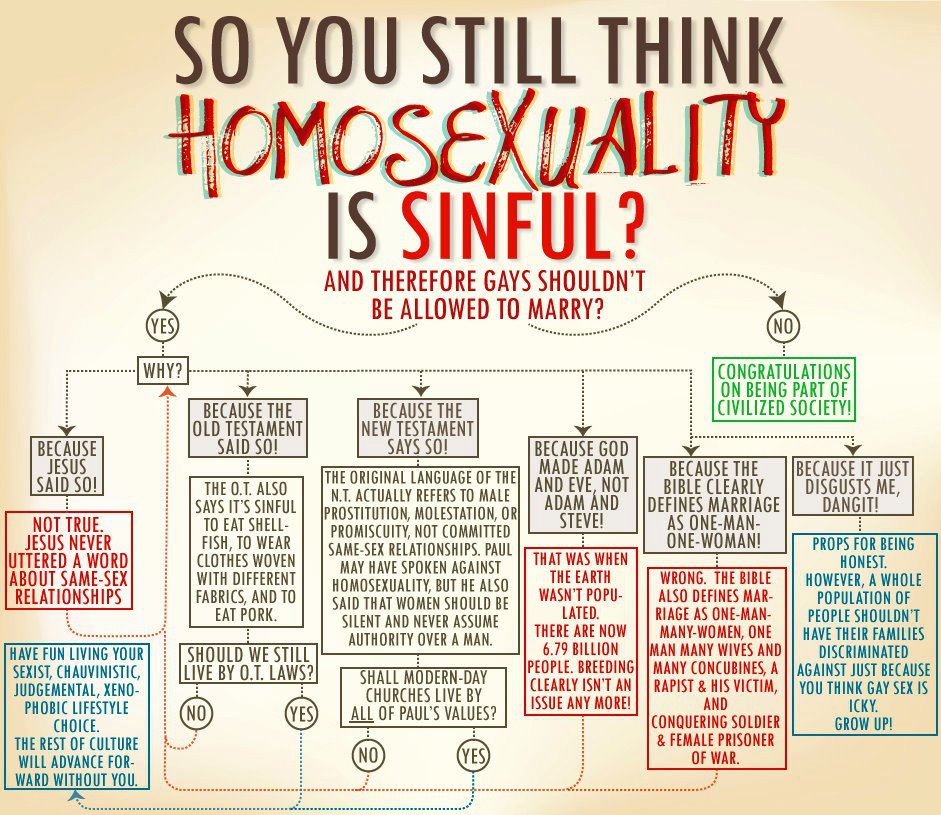
  • Social Conservatism: I identify as a left-leaning moderate (or a straightforward liberal; it depends on the day) politically. So I find conservative viewpoints to be frustrating, especially when they are backed by religion, which they often are in the Salvation Army, from pulpits or in Bible study or youth groups. That is not to say that conservative viewpoints are all wrong or incompatible with a right reading of scripture, just that I find them frustrating. That said, I do thoroughly disagree with the Salvation Army's conservative take on homosexuality, which you can read here. Go ahead and read it if you like; it's actually a very gentle, kind statement, to my eyes, not particularly harsh or judgmental. But it is based on a fairly narrow reading of scripture, and it makes little attempt to account for the fact that, if we are God's creations, then some of us are created homosexual. I will not go into all the reasons I disagree with the Salvation Army's position; my thoughts and those of many others on the subjects of homosexuality and traditional marriage are decently summarized (if somewhat playfully) here and here. 
  • Worship Style: I've discussed things like this before, so I won't dwell on it much. The Salvation Army has some very unique worship elements, but overall it's often very similar to many other "low church" settings: guitars, drums, words projected on a screen, PowerPoint sermons, and so forth. It is a style driven by the desire to attract people with the familiar, rather than a desire to connect worshipers with the body of believers past and present. (An episode of "Rev.," [season 1, episode 2] explores this issue; some great commentary on the episode can be found here.)
With all those things I find frustrating, you may ask, why do I bother associating with "the Army" (as we often call it) at all? 


Here, briefly, are some reasons: 
  • Love: The Salvation Army is full of wonderful people who love each other, God, and their neighbors. There's a reason I've grown into a fairly well-adjusted, kind, faithful person: I had a lot of really good examples to look to when I was growing up in the Army.
  • Social Justice: More than any church I've ever visited, been a part of, or read about, the Salvation Army views its primary mission as serving others, especially the poor, broken, and suffering. This, to my mind, is a fundamental element, if not the primary function, of the Church of Christ in the world (though it shames me to write it, as one who often neglects this duty). I'm proud of the Army for holding up this example to other churches and to the world.
  • Global Family: Salvationists (as we call ourselves), no matter where we are on the globe, feel connected to one another as part of the same church, in a way that I've rarely heard described in other churches. I've done a fair amount of travel, and whenever I visit a Salvation Army, be it in another state or another continent, I am instantly welcomed, and often I am already known. This is the universal experience of Salvationists. Perhaps it is because the church is so small—100,000 members in the U.S., 1,000,000 worldwide—but I think we welcome and befriend each other so readily because we know what the Army is about (loving one's neighbor, caring for others) and we trust that other Salvationists know it too.
I assure you there are other reasons to love the Salvation Army; these are the big three for me. I hope I have been able to communicate my care for this church adequately; I am frustrated by it because I love it. I do have high hopes for it in the future. 

Sources: 
Photo 1: http://commons.wikimedia.org/wiki/File:StampUSA1965SalvArmy.jpg 
Photo 2: http://commons.wikimedia.org/wiki/File:FEMA_-_38827_-_The_Salvation_Army_feeding_people_returning_to_Galveston_Island.jpg